Showing posts with label sin. Show all posts

Monday, April 15, 2013

Why I Still Preach the Old-Fashioned Doctrine of Sin


From time to time, as people are walking out of our services at Faith Evangelical Presbyterian Church (hopefully not for the last time!) I am asked why I preach the doctrine of sin so relentlessly. 

Let me briefly share the three most common formulations of this question that I hear.

(1) Isn’t the doctrine of sin hopelessly outdated and old-fashioned? Nobody talks about sin this way anymore, they reason. Shouldn’t modern people find different ways to dialogue about our problems than this old-school “puritan" talk?

Reply: We can answer this question with another question (or a series of questions): Is violence outdated? Is abuse real? Does divorce still happen? Is addiction a problem? Do you know anyone that has ever cheated on their spouse? Do you know anyone that is greedy? Have you witnessed any neighbor kids that are bullies? Have you ever seen a child that is a selfish brat? Do you know yourself to be guilty of any of these things? 

Sin’s devastating effects and consequences are still felt everywhere, both in society and in the individual heart.Therefore the doctrine of sin is not passe either.

(2) By declaring all people to be sinners, don’t Christians have a "low view" of human worth? To say it another way, shouldn’t we be looking for the best in everyone? Doesn't this kind of negativity crush people's self esteem?

Reply: We actually have a very high view of humanity and the value of human life, much higher, I content, than the unbelieving world. This is why, for example we are pro-life, and in favor of traditional marriages, and against such things as pornography. We despise actions and values that deny and degrade humans of their intrinsic worth in Creation.  

However--as high of a view of humans as we have--we have an infinitely higher view of God! We have such an exalted view of the holiness, righteousness, greatness, and majesty of God that all things look like specks of dust in comparison. How much more so, then, the sinful human heart in rebellion against a holy God! It is like comparing 10,000 candles to the light of the sun! 

We preach sin BECAUSE we believe in the holiness of God.

Objection 3: Instead of preaching sin, why don’t you just focus on morality and good works? Wouldn't it be more effective, say, to preach motivational sermons focused on doing good deeds?

Reply: We do, in fact, preach good works, but moralism alone (exhortations toward good deeds and actions) has two inherent problems: First, moralism does not have the power to change the heart. As long as we believe the "answer" is trying harder, or doing better we will continue to trust in ourselves for improvement. Eventually this will exhaust and exasperate us and we will see that a change in actions is simply not enough. We need a change of heart. The Bible calls this regeneration.

Secondly, moralism alone does not drive sinners to the cross of Christ for grace, because it contends that the answer is within oneself. The more we look to ourselves, the less we look to Jesus. The cross of Christ is the only place where sinners can ultimately find grace sufficient for this total transformation.
  
Driving sinners to the grace of the cross is the ultimate goal of all preaching, and the grounds for continuing to preach the doctrine of sin--even if fewer and fewer are doing this today.


Pastor Matthew Everhard is the Senior Pastor of Faith Evangelical Presbyterian Church in Brooksville Florida.

Monday, October 29, 2012

Are Some Sins Worse Than Others?

I have been often asked whether some sins are worse than others.

My reply is that I suppose that depends on what the questioner means by "worse."

On one hand, we can say that all sins are equal in their adequacy to condemn the sinner to hell and make him liable to the judgment of God. In that we respect, we can answer the question with a qualified "no." No one particular sin is worse than another.

Jesus taught, for instance, in the Sermon on the Mount that anger is equivalent to murder (Matthew 5:21-22) and that lust is equivalent to adultery (Matthew 5:27-30). But this equality is in respect to the pronouncement of guilt made necessary by the sin. In both cases, the mental sin (anger/lust) has the same damning power over the sinner as the actual committal of the sin (murder/adultery) would have.

Too, we can say that all sins are equivalent in that they are a violation of the holiness of God and are tantamount to what R.C. Sproul called "cosmic treason." There is no such thing, then, as a sin (no matter how small) that is not an affront to the majesty of God's nature. A peccadillo (literally: small sin) is an oxymoron.

I might also add another way in which all sins (when confessed) are equal: they can be forgiven. The Apostle John reminds us, "If we say we have no sin, we deceive ourselves, and the truth is not in us. If we confess our sins, he is faithful and just to forgive us our sins and to cleanse us from all unrighteousness" (1 John 1:8-9, ESV).

On the other hand--and I think this is highly significant--we shouldn't pretend for a single moment that being angry with a brother or calling someone a fool has consequential equality with committing murder. In the former, a man burns with hatred in his inner life; in the latter a dead body lies bleeding on the ground. In the same way, only a fool would suggest that lust has equality of consequence with actual committed adultery.

A number of Scriptures suggest the inherent inequality of the consequences of sin, including: Luke 12:47-48; John 19:11; Hebrews 10:29 [cf. 2:2-3]; 1 John 6:16. By the way, the first text listed in Luke's Gospel seems to suggest that hell itself will be worse for some than others.

This is why repentance and confession of sin must be in relation to the destructive "real time" power of sin. Personal, private sin may require no more than sincere and immediate repentance between the redeemed sinner and his Redeemer.

A man who unexpectedly lusts over a tawdry billboard while driving up 75N, for instance, does not likely need to do any more in confession than immediately repent, even while he is still driving. (Of course if lust is a perpetual problem and a repeated stumbling block for him, he may seek the counsel and comfort of confession of sin alongside his pastor or elders).

If that lust is physically carried out in such a way that he actually commits adultery--he breaks his covenant with his wife, destroys the marriage of another man, and dishonors his family and church--his confession will likely need to be public.

In this sense, then, all sins are by no means "equal." Some sins destroy the inner-life of a man. They burn like a house-fire in his heart while the man is destroyed from the inside out. And yet other sins break out of the heart and burn like wild fire. They destroy not only a man, but his family, his church, and possibly even his country.

These sins are no doubt "worse."


Matthew Everhard is the Senior Pastor of Faith Evangelical Presbyterian Church in Brooksville, Florida. Please consider following on Twitter at @matt_everhard. 


Friday, October 26, 2012

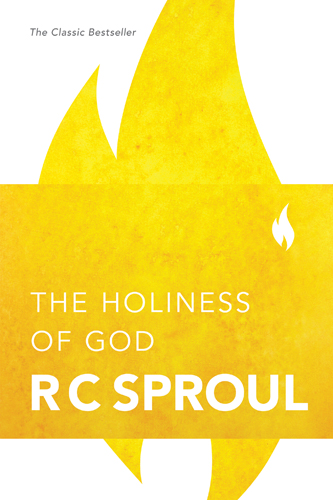
Book Review: R.C. Sproul. The Holiness of God.

The Holiness of God by R.C. Sproul is a classic in Reformed devotional literature. I would heartily recommend this work to all thoughtful Christians who are pursuing the glory of God.

The purpose of this work is to reignite a passion for worship and service of God fueled by a love for His full majesty and divine worth. In this book, Sproul masterfully shakes the reader out of his complacency by reminding him of God's utter power, absolute Lordship, and incomparable purity.

In each chapter, Sproul smashes the brittle world of generic evangelicalism with the hammer of biblical authority. When much of the evangelical world is trying desperately to cast God as either an unimposing grandfatherly figure, a divine butler waiting to assist needy persons, or a motivational guru intent on building our self esteem, Sproul has instead reminded us that such flippancy is entirely inappropriate to Biblical worship.

In chapter after chapter, Sproul sets out to prove that "the Lord your God is a consuming fire, a jealous God" (Deuteronomy 4:24, cf. Hebrews 12:29) and is still the same God who struck down Uzzah for touching the ark (2 Samuel 6:7), and Nadab and Abihu for offering strange fire (Leviticus 10).

Of course, Sproul does not want to create unmitigated fear in the believer's heart, but rather to reveal the ultimate reason why Christ had to die on the cross as an atoning propitiation for our sins: God's holiness demanded the cross since sin is "cosmic treason" against His authority, Lordship, and purity.

Sproul's chapter on Martin Luther's insanity is particularly masterful. Here, he shows how "insane" Luther really was: he saw the holiness of God and his own frailty in comparison more clearly than most. Sproul intends to show that what appears to be mental brokenness on the part of the great German Reformer was actually his ability to retain a far more accurate spiritual perception of the transcendence of God.

Thankfully, Luther was driven to the cross of grace. So too should we be driven to the foot of the cross by the impending wonder of God's holiness.


Matthew Everhard is the Senior Pastor of Faith Evangelical Presbyterian Church in Brooksville, Florida. Please consider following on Twitter at @matt_everhard.

Thursday, September 6, 2012

An Open Letter to Stay-at-Home Christians

Note: The following fictional open letter is addressed to the growing demographic of self-professing Christians who prefer to worship at home than publicly in a fellowship of other Christian believers at church.

Dear Eugene,

I want to thank you for the kind email that you wrote me recently after we met by God's providence at the Holy Grounds cafe last Thursday. I believe you are right that it was "a divine appointment" that we ran into one another, as it afforded us an opportunity to renew a conversation that we begun months ago.

Although you have chosen to no longer worship with us at First Avenue Reformed Church, I was greatly encouraged to hear that your confidence in the grace of our Lord still remains strong. You described yourself as experiencing a new joy and freedom that you had not known in a long time. For this, I am grateful.

I have to admit that part of me was deeply jealous when you described the relief that you have felt since you walked away from the frictions of the Deacon board! Our work in serving the hurting persons of our congregation is no doubt messy. Sometimes hurting people can be the cruelest of all! Since you left, those tensions have not been fully resolved, and I admit that some of the other men you mentioned are as difficult to get along with as ever. We are such an imperfect lot! In this sense, the church will always be "full of hypocrites" as you alleged.

But are not these very tensions also part of our sanctification? It is true that you were wronged by our brother Carl. I have had to apologize for our many failures as a board and as a church much more often than I would like. It is my experience, however, that those same conflicts are really the necessary and silent hand of our Master Carpenter applying His rasp and sandpaper to our lives in order to refine us.

This prompts me to ask an important question: if you continue to worship alone in your home to avoid these kinds of conflict, would you not also be missing out on the joys of their resolution? In other words, how do you intend to practice forgiveness if you seek to avoid all those whom you may actually have to one day forgive? Is not our own Christian walk made more perfect by those whose walk is not?

Eugene, I too covet those times of personal prayer and devotional worship that you described taking place in the "prayer closet." Jesus commanded as much. You are right to cite Matthew 6:6 in cultivating a "personal relationship" with Jesus. But I don't think we must choose between "personal" and "corporate" as though they were mutually exclusive.

True, those times alone with Christ in the secret place are invaluable. But I have to confess to you that I am doubtful that our Lord meant those should be our only times of worship! Are we not commanded to worship alongside others in Scripture (Hebrews 10:25)? How then shall you fulfill the dozens of "one another" texts in Paul's epistles if not in the context of a local church like those to whom Paul originally wrote? Is not the first word of the Lord's Prayer the plural possessive, "Our"?

You mentioned that the Greek word "church" does not mean a building, nor does worship require any certain number of people in order to be authentic. You even quoted Matthew 18:19 when the Lord exhorted us that "where two or three are gathered in my name, there I am among them." But come now Eugene, surely you don't think that your reluctance to submit to church membership or the body of elders is justified by this text, do you? In context, my brother, this passage is in regard to church discipline; a "severe grace" of God that I am afraid is quite difficult to impose upon oneself!

While we are speaking of the means of grace, how do you intend to practice the Lord's Supper while alone, if at all? Or baptism? Unless you have jettisoned these practices too as "formal," "religious," and "institutional!" Are these not the very signs and seals of God's grace that Christ has given--even commanded--us to perform in his name? Are they not impossible when alone?

Yes, I am sure that the online sermons of Piper and Driscoll that you have grown so fond of are a means of grace as well, so to speak. You were correct when you said they are a blessing to millions. But that's just the problem right there. No matter how wonderful these gifted men of God are (and we thank God for their ministries) they will never know you, nor can you ever be known to them. As gifted as they are, they won't be able to correct you when you go astray or exercise discipline in your life if your doctrine should go amiss.

Perhaps that's what's so alluring.

Your brother in Christ,

George


Matthew Everhard is the Senior Pastor of Faith Evangelical Presbyterian Church in Brooksville, Florida. Please consider following me on Twitter @matt_everhard


Tuesday, August 28, 2012

The Most Dangerous Book in America: It's Not What You Might Think

The Aquila Report recently shared the incredible story of a seminary professor at a liberal theological institution who was fired for merely being in the same room when a student was given a particular book. The fact that the professor, Jamal-Dominique Hopkins, allowed the book in his classroom--and did nothing to stop it's contents from actually being read--showed tacit approval of the book's contents, the "powers that be" determined.

So they axed him. Fired him. Cut him. Terminated him.

Hopkins did not give the student the book. He didn't teach from it. He just allowed the book to be present in the liberal-leaning Interdenominational Theological Center (Atlanta).  Apparently administration would have had him to burn it on the spot.

What kind of a book could be so dangerous that its mere presence in an academic classroom would warrant a professor's termination? A book about bomb-making perhaps? Maybe a maniacal manifesto to wreak violence on campus? Child pornography?

No.

The book was Robert A.J. Gagnon's scholarly work, The Bible and Homosexual Practice.

Conservative scholars deem this academic work to be the definitive book on the topic of the Old and New Testament's treatment of homosexual behavior. In the book, Gagnon, a professor at Pittsburgh Theological Seminary, argues from a historical, linguistic, textual, and hermeneutical basis that the Scriptures of the Old and New Testament agree that homosexuality is out of step with the complimentary design of the two human genders (male and female) and is therefore sinful.

Therein lies the great unacceptable offense: a scholar (Gagnon) has concluded--on the evidence of a plethora of Biblical research--that homosexuality is a sin.

(Also on this topic: The Bible, Homosexuality, and Shellfish). 

For many, the book may actually be a rather boring treatise. It is a technical work on the usage of ancient Greek and Hebrew words, interpretive methodology, and contextual issues in Romans 1 and other passages.

But it is the conclusion of this academic work that is so unacceptable: Gagnon concludes that homosexuality is forbidden as a sin, as a simple reading of the relevant Scriptural texts that he exegetes make clear enough.

It cost Hopkins his job for allowing this book to exist in his classroom. Apparently he should have cut it up on the spot or put it through the shredder.

And soon enough, this kind of view-point discrimination might cost you yours.

Matthew Everhard is the Senior Pastor of Faith Evangelical Presbyterian Church in Brooksville, Florida. Please consider following on Twitter @matt_everhard

Wednesday, August 22, 2012

Biblically Responding to Those in Sin...

First of all, we must begin with our own propensities toward sin. God’s Word tells us that “all have sinned” (Romans 3:23) and that includes you and me. That knowledge of ourselves should create a sense of humility in how we respond to others. You see, if I realize my own struggles with sin and am broken by that fact, I will tend to be much more compassionate in how I respond to others in sin. I will find it easier to “speak the truth in love” (Ephesians 4:15) because I am all too aware that I am also flawed.

However, should a knowledge of our own sinfulness cause us to remain indifferent to sin and sinners? Since we are flawed, should we sit back and allow sin to run amok? Of course not. If so, what did Jesus mean when He told us to be salt and light (Matthew 5:13-16)? To be salt and light means that we are to hold back sinful decay and expose it wherever it may be. There is no room for indifference.

So, as we are salt and light, do we treat saved people who are engaged in open, known sin the same as we do lost people who are engaging in the same exact sins? No.

Look at 1 Corinthians 5:9-13:

“I wrote to you in my letter not to associate with sexually immoral people – not at all meaning the sexually immoral of this world, or the greedy and swindlers, or idolaters, since then you would need to go out of the world. But now I am writing to you not to associate with anyone who bears the name of brother if he is guilty of sexual immorality or greed, or is an idolater, reviler, drunkard, or swindler – not even to eat with such a one. For what have I to do with judging outsiders? Is it not those inside the church whom you are to judge? God judges those outside. ‘Purge the evil person from among you.’”

If someone who claims to be a believer is engaged in sexual immorality, is greedy, has a lifestyle that shows he worships anything other than God, slanders others, is an alcoholic, isn’t honest in his financial dealings, or any number of other known, open sins, I’m not supposed to even eat with him. However, if someone who is unsaved does those same things, I can absolutely spend time with him as I seek to tell him the message of the Gospel.

Quite simply, unsaved people are going to act like unsaved people. How else should we expect them to act? They need the Gospel. So spend time with them!

But someone who claims to be a follower of Christ? Now, that’s a different story. He should know better. He claims to already have the Gospel. There’s nothing else besides what he already claims to have. So, measures are to be taken. Out of love for him and a concern for his eternal destination, we are to remove him from the protective blessings of the church (1 Corinthians 5:2) and avoid any interaction that would show acceptance of his behavior (1 Corinthians 5:11).

Why is this loving? Because in being removed from the protection and blessings of a church fellowship, he may come to the end of himself and come back to Jesus! “You are to deliver this man to Satan for the destruction of the flesh, so that his spirit may be saved in the day of the Lord.” (1 Corinthians 5:5). The desired end result is not negative. It’s restoration!

Can it truly be said that we are compassionate Christians if we don’t lovingly confront our brothers and sisters-in-Christ, when they are in sin, in the biblically appropriate way? Can it truly be said that we are compassionate Christians if we ostracize unbelievers who so desperately need the Gospel that we can share with them?
Matt Ellis is the Senior Pastor of the First Baptist Church in Brooksville, Florida.

Tuesday, August 21, 2012

Wisdom on Steroids: Conversations with J. I. Packer (Video)

This is a rare treat.  Seasoned writer, theologian and professor, J.I. Packer answers questions covering the topics of sanctification, the mortification of sin, preaching and even gives advice to writers.  Sit for a while and glean what you can.

Wisdom on Steroids: Conversations with J. I. Packer

Tuesday, August 7, 2012

Call to Worship

Picture yourself standing next to a small farm house, a few miles outside of a small town, where a small, neatly cut grass field plays host to a group of young children. In the field, boys and girls from the town run and play feverishly in the Summer heat, creating games from their imaginations as well as playing standard games such as softball or tag. As the sun begins to hide behind the trees, a bell from the front porch begins to ring as a woman's voice cries "dinner!"

While this may be an old-fashioned idea of family dynamics, there is a beautiful picture in the above illustration of a son or daughter being called to the home, to the place that they belong. Similarly, 2nd Chronicles chapter 30 provides a call for God's people, the Israelites, to return to their home. In context, 2nd Chronicles 30 explains life during the exile, when the Assyrians had been allowed by God to conquer the Israelites. King Hezekiah, the leader of the southern part of the "promised land," Judah, was calling the remnant of those Israelite exiles back to Jerusalem, to celebrate the Passover Feast, which had not been celebrated for many years. Rampant disobedience, idol worship, and Assyrian takeover had caused God's people to move away from the practice of keeping the Passover.

2nd Chronicles 30:6-9 is Hezekiah's letter to the remnant of Israel to return to the place that they belong... O people of Israel, return to the Lord, that he may turn again to the remnant of you who have escaped from the hands of the kings of Assyria... Do not be like your fathers and your brothers, who were faithless to the Lord... Do not be stiff-necked as your fathers were, but yield yourselves to the Lord and come to his sanctuary... and serve the Lord your God, that his fierce anger may turn away from you. For if you return to the Lord, your brothers and your children will find compassion with their captors and return to this land. For the Lord your God is gracious and merciful and will not turn away his face from you, if you return to him.

What a direct, pointed message! The narrative continues in verses 10-11 that some laughed, scorned, and mocked this call but that some humbled themselves and came to Jerusalem. This can be seen today. We are called to gather together in community to worship the God of the universe. In the text, "return" also means "repent." The Israelites were called to come worship, and this was most directly done through repentance of sin. Likewise, we are called today to return to the Lord by repenting of sin. Very simply, take a moment to reflect on how you have sinned against God. For the Israelites, they followed after idols. Do we not similarly follow after idols such as money, sexual satisfaction, self-interest, comforts, and many more?

In verse 15, the assembly gathered together slaughtered the Passover lamb. Gathering together to worship, they recalled God's faithfulness, prayed for repentance, and physically removed their idols. The Passover lamb was merely a foreshadowing to the ultimate sacrifice to satisfy God's wrath, namely Jesus Christ the Son of God. Paul states in 1 Corinthians 5:7- For Christ, our Passover lamb, has been sacrificed.

My challenge for you Christian is to return to where you belong. Worship with your local church body, remember to engage with other believers, repent of your sin before God, reflect on what Christ sacrificed on your behalf, and serve him in your community upon leaving worship. As the text states in verse 9, The Lord your God is gracious and merciful and will not turn away his face from you, if you return to him. Go back to where you belong, go in peace and worship our Lord. Amen.

Drew Taylor
MDiv Student 3rd Year
RTS Orlando

Thursday, July 26, 2012

Fried Chicken and Traditional Marriage?

I love Chick Fil A.

To be honest, the reasons I enjoy eating there have nothing to do with the personal views of their CEO or any management staff. I love Chick Fil A because I love their chicken and they have great service. But unless you've been hiding under a rock somewhere, you've heard almost every politico or cultural commentator  celebrating or snubbing the recent comments by CEO Dan Cathy that he supports marriage as between one man and one woman.

The Mayors of Chicago and Boston have reacted and promised to keep this business from opening in their city because of the personal views of their CEO. Of course I am biased (everyone is!) , but if you take a step back and consider  the reality of a government official promising to regulate commerce because of one person's  personal views , it is revealing and striking to say the least. The Jim Henson Company has notified Chick Fil A that it will no longer partner with them on future projects. Facebook had a "snafu" when Former Arkansas Governor Mike Huckabee invited hundreds of thousands of subscribers to Chick Fil A appreciation day, and the invitation mysteriously disappeared for hours. Needless to say, this topic has exploded and generated strong opinions and comments on both sides.

As a minister I am both encouraged and convicted. I am encouraged anytime someone in our culture who is a leader in their community, or contributes in a sphere of influence, stands up for biblical values. But I am also convicted that as a culture, we exist in such an environment where behavior can become so normalized that to question it is to invite a firestorm.

While affirming my commitment that the practice of homosexuality is sin, nonetheless I can't help feel  the church has failed in reaching out to those in the homosexual community. Heterosexual sex outside of marriage is just as sinful, and yet our Christian sub-culture makes allowances for certain taboos and respectable sins (If you haven't read Jerry Bridges' "Respectable Sins" first repent, then go read it :) We in the church need to speak the truth in love, and unfortunately we have proven the culture right at times when they have claimed that those in the conservative Christian world (of which I am an unashamed member) are bigoted or hateful. We need to repent, just as we are calling homosexuals to repent and those who support "gay marriage" to repent. Homosexuals don't need to "get straight"...they need Jesus, just like you and I do. And once we are transformed, our desires and affections are changed that we want to live in the sweet spot of life; loving and delighting in the law of God.

(For more on this topic, click here to read "The Bible, Homosexuality, and Shellfish") 

The Apostle Paul (inspired by the Holy Spirit)  sums up the problem with his usual poise and grace when he wrote to the Corinthians, "For the word of the cross is folly to those who are perishing, but to us who are being saved it is the power of God." (1 Corinthians 1:18) Let us never forget, that our only banner is the crucified and risen Christ;  not any enterprise or fast food chain (as tasty as it may be). We should not be surprised when the world rejects our message, for it is folly to a self-centered and individualistic culture. Yet it is nothing less than the very power of God to those who are refined and refreshed by its healing grace. So on August 1, if you want to eat at Chick Fil A to support their CEO, by all means go ahead! But don't forget, that taking a stand for Christ involves daily dying to our own agendas, and remembering that our life is hidden with Him (Colossians 3:3)

It has been said that some things are as American as Apple Pie and Baseball. Maybe we our entering an era (good and bad)  where something is as traditional as fried chicken and marriage.

Lee Hutchings is an Assistant Pastor at Highlands Presbyterian Church in Ridgeland, Mississippi

Tuesday, May 8, 2012

A True Sign of Repentance...

By Pastor Matt Ellis

Josh Hamilton
On Thursday, July 11, 2011, Shannon Stone took his son, Cooper, to see the Rangers play some baseball. Six-year-old Cooper's favorite player was All-Star outfielder Josh Hamilton. At one point during the game, Josh tossed a foul ball into the stands and Shannon attempted to catch it for his son. As he reached over the railing, he lost his balance and fell headlong to the concrete slab twenty feet below. He died as he was being rushed to the hospital. This unimaginably horrific incident played out as his son sat alone in the stands.

After the game, the Rangers' owner and CEO (Nolan Ryan) addressed the press. He said that the team was distraught and when asked how Josh Hamilton was doing, he noted that he was taking it pretty hard.

How would you respond if Josh had a press conference and nonchalantly said that he regretted that the man fell and, while Josh chomped on his gum, said he was sorry? 
What if his body language spoke of someone who really didn't care about the man who lost his life or his family? I'll tell you what would have happened ... Josh would have become the object of disdain from everyone watching. 

Everything within us knows that even though the event was not Josh's fault, he was part of an event that cost a man his life. His obvious signs of remorse would be a natural response for anyone with a conscience. In fact, his sorrow would be necessary because of the gravity of the event ... someone died!

In Joel 2:12, God called out to His people to return to Him. He instructed them: "'Yet even now,' declares the Lord, 'return to me with all your heart, with fasting, with weeping, and with mourning.'" 


So, the people of Israel were not simply to "chomp on their gum" and nonchalantly ask God to forgive them. They were to come with obvious signs of remorse. Why? Because it was the natural and necessary response for actions that led to a man's death. In fact, whenever you and I sin (every time we sin), those actions play a significant part in that same Man's death ... on the cross. 

While Josh Hamilton's actions were not the cause of Shannon Stone's death, our sins were precisely what caused the death of God's dear Son, Jesus. Wouldn't it be appropriate for us to show the same signs of remorse as Josh Hamilton when we come to the Father and ask for forgiveness?


Pastor Matt Ellis is Senior Pastor at the First Baptist Church in Brooksville, Florida. Follow him on Facebook @ www.facebook.com/mattellis1997.