Showing posts with label God. Show all posts

Thursday, August 7, 2014

The Old Testament: A Ten Minute Overview

Many overviews of the Old Testament are lengthy and detailed. Here however is a short synopsis (lacking many details) of the narrative of the Old Testament. Much is missing, but for the sake of brevity I have attempted to paint the broad strokes so that you might be able to take in the grandness of the Old Testament in under ten minutes for the average reader. Why not take ten minutes now and refresh your love for God as we overview the incredible story of the Old Testament.

The Creation of a People

“Then God said, ‘Let us make man in our image, after our likeness. And let them have dominion over the fish of the sea and over the birds of the heavens and over the livestock and over all the earth and over every creeping thing that creeps on the earth.’ So God created man in his own image, in the image of God he created him; male and female he created them” (Genesis 1:26-27).

In the beginning of the Old Testament God creates. His creation is incomplete until both man and woman have their being as a people created to glorify God. However Adam and Eve quickly lost sight of their created purpose and sought instead to attain God-likeness in eating from the forbidden tree at the cunning deceit of the serpent. Adam and Eve collided with sin and the creation has been subject to the aftermath ever since. They were kicked out of the garden, out from an in person communion with God. But God did not annihilate them; instead we see from the beginning chapters of Genesis a God who will pursue his people to the utmost, to the point of death on a cross.

Through the lineage of Adam and Eve comes the great family of Abraham, one whom God makes a covenant with and one who exemplifies faith. God declares he will make him a great nation through his offspring and bless him by giving him the gift of land, the Promised Land (Genesis 12). But how can God do this with a man whose wife is beyond childbearing age? The answer is profoundly simple: God is God, He has unlimited creating and redeeming power. And so Isaac is born in their old age. Through Isaac will eventually come Jacob. These are the patriarchs of our faith. Through Jacob will come Joseph who is sold into slavery in Egypt where he eventually rises to prominence and where the family of Abraham grows by leaps and bounds, making the people of God a vast nation. The creator God has created a people for Himself, a people fallen in deep need of reconciliation to their God.

The Exodus

A few hundred years pass as Israel flourishes in Egypt. A new Pharaoh arises and is afraid that Israel has become “too many and too mighty” (Exodus 1:9b) and enslaves them to his service. They have yet to inhabit freedom in the land promised by God to Abraham. In fulfillment of God’s promise, he raises up Moses to set His people free and declare the word of God to the oppressive Pharaoh. Pharaoh’s hardened heart prevents his release of the Israelites which God uses as a means to display his power and glory through ten different plagues. Pharaoh finally capitulates to the mighty hand of God over his people Israel, “Up, go out from among my people, both you and the people of Israel; and go, serve the Lord, as you have said” (Exodus 12:31).

The rebellion of Pharaoh and subsequent plagues on the people, culminating in the obliteration of Pharaoh and his army, show the end behind God’s actions—his own glory: “And I will harden Pharaoh’s heart, and he will pursue them, and I will get glory over Pharaoh and all his host, and the Egyptians shall know that I am the Lord” (Exodus 14:4). In their exodus, the Israelites led by God, part the Red Sea and cross into the wilderness. As the Egyptians pursue, God unleashes the walls of water that have allowed the Israelites to cross on dry land and drowns them. The Israelites are now free but have yet to inhabit the land promised.

The Law, the Wilderness, and the Promised Land

In the wilderness we see two mighty traits emphasized, the holiness of God and the sinful rebellion of mankind. God leads the Israelites by a pillar of cloud by day and a pillar of fire by night to Mt. Sinai. It is here that God reveals to Moses the Law—the revelation of God’s holiness and the Israelites subsequent call to live in accord with the honor that is due for God’s people.

However while Moses is receiving the incredible revelation from God on Mt. Sinai, the people rebel. They create for themselves a golden calf under the leadership of Aaron, Moses’ brother. They turn their worship from one who has so miraculously freed them to a golden image, a god of their own creation. The fall echoes everywhere in the lives of mankind.

The Israelites set out from Mt. Sinai towards Canaan, the promised land. As they move they seek to be faithful in their worship of God. They institute the priesthood and the tabernacle of the Lord from camp to camp. The tabernacle exists as a command from God as a dwelling place for the Lord and a place of sacrifice for the sins of the people by the priests.

As the Israelites move towards Canaan, they become discontent and exhibit a rebellious spirit towards God. The providence of God, the physical sustenance of manna and his continual leading, was not good enough. God instead leads them through the wilderness for 40 years, until the generation that left Egypt had passed away and a new generation had been born. With a new generation being called back to faithfulness, Moses retells the law and desires of God for His people (Deuteronomy). At this point Israel crosses into the Promised Land, Canaan, a land flowing with milk and honey. The covenant with Abraham is fulfilled as the Israelites conquer the nations in Canaan and grow to be a mighty people of God.

The Rise and Fall of the Monarchy

One would think that the Israelites in knowing their God, one who has displayed Himself as utterly loving and caring, would faithfully serve and worship Him alone. The history of Israel however is quite the opposite unfortunately. In the Promised Land the Israelites rebel against God, “They abandoned the Lord and served the Baals and the Ashtaroth” (Judges 2:13). The Lord institutes judges to lead the people towards holiness but even then they did not “listen to the judges, for they whored after other gods and bowed down to them” (Judges 2:17). Sin is an infection of the heart which turns all humanity away from God.

The judges were not good enough for the Israelites. They wanted to be like the other nations. They wanted a king, an evil thing in the sight of the Lord because He was their King. God institutes a monarchy for the purpose of turning them back to Himself, which fails to happen initially, but from whose lineage will come one who will redeem and reconcile God’s people to Himself, the Messiah.

Saul is anointed and installed as the first human king of Israel. The people rejoice and return to the Lord. However Saul soon turns in rebellion and hardness of heart. God raises up a young man David whose celebrity becomes renowned thereby enraging the king’s jealousy. Saul intends to put David to death and pursues him eventually coming to ruin by the hands of the Philistines.

David becomes the second king of Israel. He leads the Israelites as an exemplary king to worship their God. While he may be the greatest king of Israel, he still shows the depths of sin in the human heart through things such as his adultery with Bathsheba and cover-up murder of her husband. Nonetheless God enters into an incredible covenant with David: “Moreover, the Lord declares to you that the Lord will make you a house…I will raise up your offspring after you…I will establish the throne of his kingdom forever. I will be to him a father and he shall be to me a son” (2 Samuel 7:11-14). In spite of all of Israel’s rebellion, God is eternally a God in relationship with them. He will not shake them off like dust from his feet. They are His people and He is their God. Here is a promise greater than any promise of heritage and land, here is the promise of a coming King, one who rules with holiness and grace, one who can blot out transgression and impute righteousness. But this King is far off.

The history of the remaining kings of Israel is a dismal chapter in history. Things begin well with Solomon who builds the temple of the Lord in all its splendor but quickly spirals out of control in sin and rebellion. From one king to another they turn more and more wicked in their worship of other gods, returning here and there to a king who tries to lead in faithfulness. The kingdom splits over desire for power, the north becoming the kingdom of Israel and the south becoming the kingdom of Judah. This period of Israel’s history is covenant disloyalty at its worst.

Exile and Return

As a consequence of this faithlessness, God hands over his people to foreign nations and foreign lands. Their freedom and Promised Land is lost. The northern kingdom Israel is exiled in 722 B.C. after their capture by the Assyrians. In 587 B.C. the southern kingdom Judah is taken captive and led away by the Babylonians who destroy God’s temple. At this point things seem like God is done with His people, maybe He has had enough with their wanton rebellion and contempt for His mercy towards them. But even in the midst of sin God does not give up on His people. We cannot read the Old Testament and see a God of wrath only; He is a God of grace and mercy that pursues His people relentlessly.

In 538 B.C. the southern kingdom of Judah that was exiled to Babylon began to return to the Promised Land. The Persians, under the leadership of Cyrus, conquer Babylon. Cyrus permits with a public edict the return of God’s people and the rebuilding of His temple. The northern kingdom Israel remains in exile. The return of God’s people to Jerusalem culminates in the rebuilding of the temple and the walls of the city. It is here in postexilic Jerusalem that the Psalms take a prominent role as the hymnbook of God’s people.

Conclusion

The Old Testament is a continual witness to the mercy of God in creating and sustaining a people for Himself. The events that transpire are a continual declaration of who God is and who He calls His people to be, a faithful people restored in relationship. But yet there is much left wanting. There is an unfinished covenant made with king David, there is a promise of a coming Messiah through the prophet Isaiah that God’s people long for. God’s holiness and mankind’s sin are ever on display in these 39 books. The reader cannot help but see their own heart’s rebellion and need for forgiveness. The Old Testament points towards a need for restoration, it points towards the total sinfulness and rebellion of mankind, it points to a God who will not let us wallow in sin, it points to Jesus.

*     *     *

JT Holderman is Assistant Pastor of Bellevue Evangelical Presbyterian Church in Gap, PA.

Wednesday, October 16, 2013

The Existence of God Amidst Evil

For many the problem of evil prevents a belief in God. Many phrase it like this: :"If God is all powerful and truly good, then why would he allow evil to exist?" A theodicy seeks to work out an answer to this question. Many simply decide that their theodicy is to disbelieve in God, that therefore God cannot exist, because if He was good and all powerful evil would not exist.

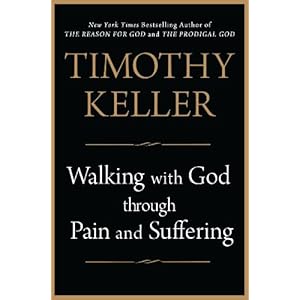
However Tim Keller in his latest must-own book Walking With God Through Pain And Suffering argues poignantly that this inconsistency between the reality of an all powerful and good God and the problem of evil are not ultimately at odds:
If God has good reasons for allowing suffering and evil, then there is no contradiction between his existence and that of evil. So in order for his case not to faith, the skeptic would have to reply that God could not possibly have any such reasons. But it is very hard to prove that.
To show the skeptic that his premise is untrue, the believer could point out that we ourselves often allow suffering in someone's life in order to bring about some greater good. Doctors often inflict painful procedures and treatments on people, all for the purpose of the greater good of better health and longer life. Parents who punish bad behavior with the loss of toys or privileges are causing pain, but the alternative is that the child will grow into an adult with no self-control and would therefore experience far greater suffering...Many can point to adversity in their lives that, however excruciating, taught them lessons that helped them avoid greater suffering later. So the principle of allowing pain for the good reason of bringing about a greater happiness is valid and one we understand ourselves. That means there is no automatic inconsistency between God and the existence of evil and suffering. (97)
Keller, like usual, knocks this topic out of the park. I would invite you to read his text. We all face evil and suffering in this world and Keller provides arrows in our quiver for us to deal with them when they come.

JT Holderman is Assistant Pastor of Bellevue Evangelical Presbyterian Church in Gap, PA.

Tuesday, December 4, 2012

Why Some Prayers are Weak

The effectual fervent prayer of a righteous man availeth much. Elias was a man subject to like passions as we are, and he prayed earnestly that it might not rain: and it rained not on the earth by the space of three years and six months. And he prayed again, and the heaven gave rain, and the earth brought forth her fruit (James 5:16-18. KJV).
We pray in accordance with our doctrine of God. The higher our theology of God, the more devoted to prayer we ought to become. The higher we regard His majesty, the more we are driven to His throne. Unfortunately, the opposite is also true. The higher we esteem ourselves, the less driven we will be to such an 'unproductive' and ethereal act as prayer.

Is it possible that some prayers are hindered by our faulty, sloppy, or lazy theology of God's holy nature?

I think that, more often than not, we pray in accordance with our actual view of God. The kind of 'god' we believe in deep down. Not with the doctrine we SAY we profess. Not with the doctrinal statement that we assent to on paper. Not with the creed or confession to which our denomination subscribes. But we pray in accordance with the doctrine of God that we actually believe.

This doesn't mean that those with a high view of God will always pray 'from strength to strength.' Even the most godly men fail when it comes to prayer! We all do. Even our best prayers need to be washed in the blood of Jesus. But too often, I would suggest, we utter feeble prayers (if we pray at all) when we lose our zeal for the greatness and supremacy of God.

Allow me to illustrate. 

Imagine two sliding controls on a console before you. The first toggle represents our view of God; the second our view of self. The higher the first slide is positioned, the lower the second must necessarily be. If I slide one up, I must slide the other down in a corresponding fashion. I cannot hold both God's sovereignty and my own sufficiency in the same esteem.

If we pray halfheartedly, without fervency, lacking conviction, or not at all, we are simply revealing that our theology is weak no matter how orthodox we claim it to be on paper. We are then revealing that our confidence in self is where our true reliance lies. We pray weakly when we believe in a weak, small, and finite deity.

But if we pray in accordance with our understanding of the true nature of God--His omnipotence (limitless power), omnipresence (ubiquitous presence), and omniscience (all-encompassing knowledge)--we are praying to a God who has inestimable power. We are praying like Elijah. No wonder he prayed fervently. No wonder the Heavens broke open and gave rain!

A Mighty God is worthy and able to handle mighty prayers. 


If this article was helpful, it may be helpful to some one you know. Please "like" or re-post with the buttons below.

Matthew Everhard is the Senior Pastor of Faith Evangelical Presbyterian Church in Brooksville, Florida. Follow on Twitter at @matt_everhard.


Friday, September 28, 2012

Book Review: C. Stephen Evans. "Philosophy of Religion: Thinking About Faith."

In this short book, C. Stephen Evans has done an admirable job of making the incredibly complex world of the philosophy of religion attainable to new students in this field. As such, this work would make a very helpful textbook at the introductory college level. Throughout this work, Evans does a remarkable job of defining the seemingly unending array of technical verbiage, while giving helpful illustrations to explain their usage to the reader.

"Philosophy of religion," as a technical term, is the particular branch of philosophy which, as its name suggests, grapples with religious truth claims and beliefs through the grid of reason and logic. Among the topics covered in this book are:
  • the classical "proofs" for the existence of God, 
  • the validity of religious experience, 
  • the nature and possibility of miracles, 
  • particular objections to theism (such as evil and the apparent contradictions of science), 
  • and the unsettling difficulties related to religious pluralism.
Each one of these topic could easily fill an entire volume.
In this reviewer's opinion, the most helpful aspect of this work is the way that Evans fairly and evenhandedly deals with skeptics' attacks on theism. While Evans eventually does show the rationality of theism (and particularly Christianity) in each chapter, I don't think anyone could accuse Evans of attempting to deal with the skeptic's challenges unfairly or impatiently. Where he sees weaknesses in the theistic position, he does not attempt to hide them. Where he sees strengths, he likewise argues back with equal force. 

No chapter of this book should be seen as an outright apologetic defense of theism in general or Christianity in particular. It is not a book on apologetics. On the other hand, Evans does his best to show over and over again that belief in God is rational, logical, and coherent in the face of a number of threats and claims to the contrary.

In his chapter on the classical proofs for God's existence, for instance, Evans does not pretend to claim that any one 'proof' would compel all rational thinkers. On the contrary, he does assert that the preponderance of the evidence points in a cumulative way towards the existence of God. Likewise, in his concluding chapter on religious pluralism, he admits that Christians in particular have appeared to be arrogant in their claims of religious exclusivity, and yet he concludes this book by acknowledging the inherent humility of Christianity, even as it regards our evangelistic mission.

In conclusion, I think three groups of readers will find this book helpful.

1) First, the student who is interesting in determining for himself whether theism in general and Christianity in particular holds any water logically and rationally; 2) secondly, the non-theist who has many skeptical reasons to deny the validity of religious faith, but who nonetheless is open to reviewing his presuppositions; and 3) finally, the pastor who is interested in presenting some of the logical basis and rationale for Christianity to his congregation in an accessible manner.

Matthew Everhard is the Senior Pastor of Faith Evangelical Presbyterian Church in Brooksville, Florida. Please consider following on Twitter @matt_everhard.


Tuesday, September 4, 2012

The Cosmological Argument: The Existence of God Demonstrated by the Existence of the Universe

Have you ever wondered why there is something rather than nothing?

All things being considered fairly, it’s probably more likely that nothing would have existed than something. If nothing ever existed, we wouldn’t have to ask where any of it comes from. There wouldn’t even be an “us” to ponder the question.

But that fact that something exists  rather than nothing is a primary clue to approach the God Question. The fact that something exists--anything--begs the question: where did it come from?

The Cosmological Argument
One of the classical "proofs" for the existence of God is called the Cosmological Argument. It is called the cosmological argument because the word “cosmos” means universe. It is an argument for the existence of God based on the existence of a universe. The cosmological argument is centuries old. It goes something like this:

    A. Some things exist. Would anyone really dispute this point? If you do, raise your hand. If you raised your hand you just raised a thing and confirmed Premise A.
    B.  All things that exist are either caused (contingent) or uncaused (necessary). Really there are no other categories. I doubt many would deny Premise B either.   
    C. If caused (contingent) things exist, there must be an uncaused (necessary) thing as their ultimate source.
   
    Conclusion: This uncaused (necessary) thing is God.

All contingent things are caused or made by something else. When we take any one object (a desk, tree, a shoe, a man) and consider its origin, we can trace it to other contingent things. In a long series of successive "causes" we trace caused (or contingent) things back to other caused (contingent) things, to still other caused (contingent) things until eventually we have to say—there must have been an uncaused cause that started the entire series in the first place.

Unmoved Mover
Aristotle (384-322 BC) in Book 12 of his “Metaphysics” called this necessary logical starting point the “Unmoved Mover.” Aristotle himself was not a Christian. He wasn’t a Jew either. His “Unmoved Mover” was a far cry from the God of the Bible that we know and love. But at least this pagan philosopher recognized that at the starting point of history there must have been a necessary being that himself is not caused, created, or made, or initiated by anything else. There must have been an Unmoved Mover!

Some will say, “We science people call that the ‘Big Bang,’” i.e. when the universe spontaneously erupted into existence. But naked science has some real philosophical problems. The Big Bang cannot qualify as the Unmoved Mover because it does not explain what caused it to go “bang” in the first place. As a theory, it doesn’t explain how “matter” got there or what caused it to explode two seconds before it did. Eventually, Aristotle (and Thomas Aquinas after him) would say: we must ultimately come to a being that does the causing, without Himself being caused.

In other words, underlying all contingent things, is a necessary being--God.

Matthew Everhard is the Senior Pastor of Faith Evangelical Presbyterian Church in Brooksville, Florida. He is currently doing a sermon series entitled He is There and He is Not Silent in which he is considering the cumulative case for the existence of God.

Monday, July 9, 2012

First Love

First Love
By: Drew Taylor


Darkness. That is the best description of what I felt as I walked through the seven-story mall in downtown Bangkok, Thailand on a Saturday afternoon in mid-June. Off for the afternoon while serving on a mission trip, our team headed to the mall to experience big-city life in the Far East. In the MBK Center, hundreds of people crammed the walkways, millions of lights flickered across stores that advertised cellphones, videogames, clothes, candy, and much more. Despite all the business, all I felt was an overwhelming sense of darkness. Half-way across the world, in one of the most prominent cities in the eastern-half of planet earth, I encountered many, many people who did not have a first love. David, in 2nd Samuel 22:29 acknowledges God with the praise, “You, Lord, are my lamp; the Lord turns my darkness into light.” In a spiritually dark place like Thailand, the feeling of darkness will pursue you aggressively. In America, the same darkness creeps in much more subtly.


We are living in a spiritually dark time in a spiritually dark country. The “already” of Jesus Christ’s inauguration of God’s kingdom through his life, death, and resurrection is over-shadowed by the “not-yet” of God’s kingdom on Earth failing to be fully present until Christ’s return. I am consistently guilty of falling on both sides of this pendulum. I’m either not accepting God’s grace while trying to righteously work for a righteous status with God through “ministry,” or I accept his grace cheaply, viewing it as license to sin and violate God’s holy law. Lately, it has been much of the former. While I have accepted the grace Paul talks about in Ephesians 2:8-9, I fail to accept the second half of the verse “not by works so that no man can boast.” Failing to live out of this grace and falling back into works based righteousness, I cheapen the work of Christ while attempting to increase my own feeble efforts. Maybe this is you… If so, you are not alone, you are merely hiding amongst the shadows of your own darkness rather than in the truth of God’s light provided by his daily grace. Jesus’ disciple, John, paints this picture beautifully in 1st John 1:5-6, when he states that “This is the message we have heard from him and declare to you: God is light; in him there is no darkness at all. If we claim to have fellowship with him and yet walk in the darkness, we lie and do not live out the truth.”


For me, it’s about failing to hold on to my first love. By loving myself first rather than God, I worship the idol of self, much like the Israelites loved the idols they had created to worship instead of God. This is communicated in Hosea 2:7, which compares the Israelites to a cheating wife. The verse states- “She will chase after her lovers but not catch them; she will look for them but not find them.  Then she will say, I will go back to my husband as at first, for then I was better off than now.”


Those people in the mega-mall in Bangkok did not have the Lord as a lamp, and despite being surrounded by people, wealth, and entertainment, lived dependent on themselves and thus in utter darkness. Sadly, many of us who know Christ and have experienced his light will often revert back to the darkness of worshipping an idol, worshipping self. When living as dependent children of God, we live as we were created to live… In the light. Fully alive. In love with our first love.
Drew Taylor
RTS Orlando MDiv Student (3rd year)
Pastoral Intern at Willow Creek Church (PCA)