Showing posts with label book review. Show all posts

Friday, November 21, 2014

The Ten Best Books on Jonathan Edwards' Theology of Joy: Recommendations for Beginners and Scholars


I am now just about at the halfway point in my doctoral studies from Reformed Theological Seminary in Orlando, and just a few days away from submitting my proposal to the faculty for my dissertation.

So far, my topic is narrowly focused on Jonathan Edwards' theology of joy. For anyone who has ever attempted to read Edwards, they find his writings just dripping with joy-related language: happiness, rejoicing in Christ, the joys of heaven, the mutual love within the persons of the Trinity.

Joy is everywhere! Rich language of light, the sun, fountains, rivers, and streams all emit Edwards' theology of Christian joy.

I've read deeply and broadly: books by Edwards and books about Edwards. I've read his treatises, sermons, and personal correspondences. I've read biographies about him and at least one biography from his own pen (David Brainerd).

Everything is so good, it's hard to pick. Nevertheless, I am going to attempt to recommend just one shelf full of JE books. Here then, are my top ten recommended works from or about the Northampton Revivalist (in no particular order).

Sermons

1. Sermons of Jonathan Edwards. (Peabody, MA: Hendrickson. 2005). If you are looking to find some of Edward's best sermons like "Sinners in the Hands of an Angry God," "A Divine and Supernatural Light," or "God Glorified in Man's Dependence" this is the place to begin.

2. Sermons by Jonathan Edwards on the Matthean Parables: True and False Christians (On the Parable of the Wise and Foolish Virgins). (Kenneth P. Minkema, Adriaan C. Neele, and Bryan K. Kimnach, eds. Vol. I. Eugene, OR: Cascade Books. 2012). What's neat about this volume, is that unlike the above, this one is filled with previously unpublished sermons that just came into the public eye in 2012.

3. Charity and Its Fruits. (Carlisle, PA: The Banner of Truth. 2005. Orig. pub. 1852.) Another of his major sermon series, converted into a treatise, this one focuses on the "love chapter" of 1 Corinthians 13 and features the glorious sermon "Heaven is a World of Love."

Treatises

4. The Religious Affections. (Mineola, NY: Dover. 2013. Orig. pub. 1746.). Likely Edwards' most well-known treatise, this book looks at the powerful inclinations of the heart (love, joy, fear etc.) and uses them to help determine which religious experiences are true and which are false. A major work tied to the Great Awakening revivals of the 1740's.

5. God’s Passion for His Glory: Living the Vision of Jonathan Edwards. With the Complete Text of The End for Which God Created the World. (Jonathan Edwards and John Piper. Wheaton, IL: Crossway, 1998. Orig. pub. 1765.). In this book, beloved pastor John Piper walks readers through JE's easier-than-you-might-think treatise on God's motivation for creating the universe. Hint: joy!

Biographies

6. Jonathan Edwards: A Life. (George Marsden. New Haven, CT: Yale University Press. 2003). Here is a 500 plus page work that masterfully takes readers through JE's life and times. I cannot imagine doing serious study on Edwards without this volume. Another honorable mention in this category is Iain Murray's work of a similar structure.

Popular Introductions

7. A God Entranced Vision of All Things: The Legacy of Jonathan Edwards. (John Piper and Justin Taylor, eds. Wheaton: Crossway. 2004). Many crisply written essays on Edwards and his theology from men like Piper, Sam Storms, Mark Dever, and more.

8. Jonathan Edwards for Armchair Theologians. (James P. Byrd. Louisville: Westminster John Knox Press. 2008). A great little introduction to Jonathan Edwards with cartoons sprinkled throughout to help readers "get it." Really! There are cartoons!

9. God’s Grand Design: The Theological Vision of Jonathan Edwards. (Sean Michael Lucas. Wheaton: Crossway. 2011). An excellent little introduction of about 200 pages to Edwards' life and major thought categories.

10. Edwards on the Christian Life: Alive to the Beauty of God. (Dane Orlund. Stephen J. Nichols and Justin Taylor, eds. Wheaton, IL: Crossway. 2014). A very helpful book that focuses primarily on Edwards' view of beauty but also considers: prayer, temptation, Scripture, gentleness and more.

-Matthew Everhard is the Senior Pastor of Faith Evangelical Presbyterian Church in Brooksville, Florida.


Friday, October 17, 2014

A New "Left Behind" Movie? Why I'm Skipping This One...


I have no plans to see the new Left Behind movie, and it is not because one of my least favorite actors is the star (Nicholas Cage). No, I'm afraid I'm skipping out on this one for theological reasons.

First of all let me say, Yes! I believe Jesus is returning. Yes! I believe it is a literal, personal return. Yes! I believe that He is coming back to judge the living and the dead.

But not in the way that Left Behind popularly portrays the rapture. I think they've got it seriously wrong, at least judging by the first movie (did we really need a new one?) and the fictional book series by the same name.

Instead, I want to recommend a book on eschatology (study of the end times) that I think interprets the Bible's real view of the endtimes much better. (See review below).

It is taken for granted that pretribulational premillennialism (or dispensationalism) is gospel truth in most quarters of the evangelical world today. This, however, has not always been the case.

Pretribulational premillennialism, popularized by such fictional works as the Left Behind series and fantastical works as The Late Great Planet Earth--not to mention the Scofield Reference Bible--has quickly infiltrated the center of evangelicalism. This despite the fact that it is less than 200 years old!

Many evangelicals are not even aware that there are any "alternative" positions on the end times. That these alternatives held the majority consensus among the Puritans and Reformers is lost on most. If many today are aware of these other eschatological options at all, they have likely been taught that they are the positions held by liberals who do not "take the Bible literally."

In Kingdom Come: The Amillennial Alternative, Sam Storms destroys these preconceptions by powerfully asserting the Biblical force of the historic position that the millennial kingdom--mentioned explicitly only in Revelation 20:1-10--is symbolic of Christ's present reign in this age.

Storms begins the near 600-page work by advancing the hermeneutical principles on which he will build his case. In these early sections of this book, Storms makes clear that bald literalism is not always the best interpretive grid, especially for apocalyptic literature. Genre, literary conventions, and OT usage of language are also crucial factors when we interpret Scripture.

Using a redemptive-historical and grammatical-historical approach, Storms then wades through the most important Bible texts related to eschatology: Daniel's 70 weeks, Jesus' Olivet Discourse, 2 Thessalonians and the Antichrist, and of course, a volume of passages in Revelation.

While Storms works through these passages as a master exegete, he calmly (and without a divisive spirit I am glad to report!) shows how many of these texts have been misread through the dispensational lens, often without the critical reflection that the texts themselves demand. Storms reveals an absolute mastery of Biblical Greek, and employs this trade in the most intricate details of these Biblical passages.

Though most will doubtlessly disagree with at least a few of Storms conclusions (I doubt all readers will be convinced of his partial preterist interpretation of Matthew 24, for instance), it will be impossible to suggest any longer that amillennialism is built upon either a lesser view of the authority of Scripture in particular, or a liberal theological framework in general. No, it will no longer do to simply dismiss amillennialism (or postmillennialism for that matter) as though they do not take the Bible seriously enough.

On the contrary, the reader--who must do significant work alongside Storms with Bible and pencil in hand throughout--will see a cumulative case building for amillennialism. This is spelled out clearly and finally in the last chapter of the book where Storms gives 30 reasons that he believes pretribulational premillennialism is not Biblically defensible. Storms' amillennial construct (actually the simplest and cleanest of the four major end-times positions) holds up remarkably well when tested by the WHOLE of the New Testament rather than conditioned by one admittedly difficult and highly symbolic text (i.e. Revelation 20).

For me, the most compelling Biblical data summoned by Storms can be summed up in the following points:
  • The NT never splits up the Return of Christ (that it, His Second Coming) from the Rapture as though they were two separate events. (Dispensationalism demands this). 
  • Neither the OT nor the NT ever split up the resurrection of the dead into two events (or possibly many more!) separated by a thousand years as dispensationalism requires. 
  • The NT teaching on Jesus' parousia (Greek: return, presence, coming i.e. the Second Coming) demands the end of all sin, death, and rebellion, along with the immediacy of the judgment; all of which dispensationalism denies. 
  • The NT  does not make an irreconcilable distinction between the Church and Israel (which dispensationalism requires) but rather shows repeatedly that the elect people of God are made into one Body of Christ with the inclusion of the Gentiles.
  • The NT does not admit of a secret pretribulational rapture, allowing Christians to escape the great tribulation mentioned in Matthew 24 (as dispensationalism holds), but rather describes the trials and tribulations of the present church age as the necessary path of all Christians, through which Christ will preserve His people. 
If one's doctrinal convictions will not allow him to fully adopt Storms' view on all of these important matters, at least the reader will grant that Kingdom Come is a paradigm shifting volume. Although most of our dispensational brothers and sisters in Christ will resist the force of Storms' arguments, they must at least return to the drawing board to patch up the holes Sam Storms has lovingly poked in their charts. 

-Matthew Everhard is the Senior Pastor of Faith Evangelical Presbyterian Church in Brooksville, Florida.

Friday, June 27, 2014

Book Reviews: Jonathan Edwards, "Sermons on the Matthean Parables" Volumes I, II, & III (Wipf and Stock Publishers)

I am here reviewing all three volumes of sermons in this new series on the Matthean Parables by Jonathan Edwards, published by Wipf and Stock, and edited by Kenneth P. Minkema, Adriaan C. Neele, and Bryan McCarthy.

I say "new" because these sermons have been essentially hidden from modern audiences since they were originally preached in the early to mid 1700's. Thankfully, as of 2012, they have finally been transposed to printed form from their original manuscripts in Edwards' own puzzling handwriting. 

For decades and even centuries, these manuscripts have been stored away, deep in the vault of history, now currently resting in the caring hands of the Jonathan Edwards Center at Yale University.

Today, these powerful sermons can again lift Edwards' voice and be heard anew, in some cases more than 270 years after they originally thundered from the Northampton Church pulpit. Since then, almost no human eyes have viewed them since the Colonial Congregationalist penned them himself. For this reason, these three paperback volumes are a true treasure chest, replete with jewels and gems for advancing Jonathan Edwards studies. 

The whole series, I think, will significantly move forward our understanding of Edward's theology of regeneration and conversion, not to mention his theology of, and first-hand participation in Great Awakening-era revivalism. 

Each of the three volumes is a compendium of multiple sermons on one particular parable. Often, Edwards' sermons were preached over various occasions (called "preaching units") and took on a life of their own, far beyond the typical hour-long sermonic format, so commonly known among the Puritans. Such is the case with these sermons: they are really each a greatly extended but cohesive literary whole, preached upon a particular pericope of Scripture. 

Each sermon series (in one case, 19 preaching units!) treats of multiple theological doctrines, and contains various of Edwards "uses," or applications. Of course, they were originally preached over the time-frame of multiple weeks and even months, often containing both morning and afternoon/evening oratories. 

Volume One focuses on the "Parable of the Wise and Foolish Virgins" (Matthew 25:1-13). Here, Edwards intends to show the similarities and distinctions between those who virgins who have oil in their lamps and those who do not. In this way, Edwards draws some distinctions between the Church Visible, and the Church Invisible. His primary thrust is to show that there are many professing believers who would appear to be genuinely converted, and yet do not have the new principle of inner life, given only by the sovereign hand of God. 

Volume Two treats of the "Parable of the Soils" (Matthew 13:1-23). Predictably Edwards discourses at some length the four general responses that hearers have to the Gospel as originally given and explained by Jesus. Interestingly, this sermon series was preached immediately after George Whitefield had come through Northhampton. The sermon series itself more than hints at Whitefield's revivalistic power and affect, and the people of Edwards' congregation's reaction to the same. This volume contains an additional text by Whitefield, a brief treatise on how to "hear" a sermon. 

Volume Three is in regard to the "Parable of the Net" (Matthew 13:47-50). Here Edwards powerfully describes the doctrines of grace as it relates to as-yet unregenerate men being forcibly pulled from their natural element (like fish from the sea) and prompted to die to self and live the new life of conversion in Christ. This third volume, although much more in outline form than the others, has the added distinction of being preached at the same time that Edwards was preparing The Religious Affection for publication. For this reason, the reader gets a unique look into what Edwards was stewing on during this great book's final preparations. 

What ties these three volumes together and makes them interesting historical and exegetical material is their relationship to the events of the Great Awakening. Each volume was preached at a unique time in early colonial revivalism history. Additionally, the series taken together gives the modern reader a view of Jonathan Edwards' theology of the Kingdom, since Minkema and Neele have wisely chosen a set of sermons  for publication that are moored to theological motifs held in common by each parable. 

Readers will find these sermons to be a very helpful companion as they read other works of Jonathan Edwards such as The Religious Affections which deal with very similar topics and themes, if only in a more didactic form. For many, the sermons will actually be easier to read than his treatises. 

One weakness should be mentioned. I am not sure why the editors chose to include the very same opening article on "Edwards the Preacher" by Wilson H. Kimnach in all three volumes, but alas, they did. Perhaps they thought that some readers would not buy the whole set and would need the same article printed separately in each volume. For my own part, I would have preferred that they included different prefatory materials in each book. Together they could have done more to prepare and educate the reader as to the historical context of the sermon series. 

Moreover, this set of three books will be an incomparable treasure to all Edwards scholars, as it was to me. The very idea that I am reading today what was hidden for centuries was enchanting. Scholars, pastors, and students of revivalism alike will all greatly benefit from these faithful, historic proclamations of Gospel truth!

--Matthew Everhard is the Senior Pastor of Faith Evangelical Presbyterian Church in Brooksville, Florida. 


Thursday, June 26, 2014

Book Review: John Bunyan: "Grace Abounding to the Chief of Sinners"

GraceAbounding is the spiritual autobiography of John Bunyan, the author of the perpetually best selling The Pilgrim’s Progress. In this work, Bunyan gives the reader his torturous experience of blasphemy, conversion, sanctification, and his long quest for personal assurance of salvation. In this work, Bunyan admits to experiencing the most arduous spiritual exertions that a believer might encounter. Time and again, Bunyan experiences a familiar cycle of guilt, grace, gratitude, and glory—only to fall back into despair once again.

Reading this work as the companion to Pilgrim’s Progress will show discerning readers exactly where Bunyan derived his colorful ideas for his great allegory; they are drawn from the costly experiences of following Christ in his own life. Both books finally end in grace—Christian enters the Celestial Gates, and Bunyan is given full assurance in Christ before his death. Ultimately, albeit through much suffering and persecution from both men and devils, Bunyan does find peace and serenity at the cross, trusting Christ alone for his righteousness, although is spiritual turmoil is extreme.

The final chapters are really appendices to the main body, recounting Bunyan’s criminal trials and prison experiences, as well as that of his wife. These too, are the fountain of much pure devotional water to the thirsty modern pilgrim.

The beauty of this work is the Bunyan describes so poignantly what we all experience in our lives: doubt, despair, fears, and failures. Surely this work would give greater confidence to any “sinking and drowning” modern believer. He or she will find in John Bunyan a true companion for the many of us who suffer bouts of doubt, especially as it regards our own salvation.

This work is certainly a well-needed corrective to our modern understanding of salvation. Many today feel that their Christianity is assured by their having walked an aisle, said a sinner’s prayer, or even having been raised in a Christian home. Bunyan’s grappling match with his own salvation will provide for us an example of a man who refused to put his trust in anything but the crucified and risen Christ.

As this is recognized as a literary masterpiece, there is very little to critique here. Perhaps some readers will become frustrated with Bunyan as he seems to wrestle repeatedly with sins and doubts that he has already defeated before through the grace given by the Holy Spirit. But is this really any different from our own experiences? More likely, readers will find that Bunyan is a true companion in the path of discipleship, and a kindred spirit with our own inner confliction with sin and guilt in our own time.

Best Quote: “I never saw those heights and depths in grace, and love, and mercy, as I saw after this temptation; great sins to draw out great grace; and where guilt is most terrible and fierce, there the mercy of God in Christ, when showed to the soul appears most high and mighty.” (Location 1219).

--Matthew Everhard is the Senior Pastor of Faith Evangelical Presbyterian Church in Brooksville, Florida. 

Tuesday, June 24, 2014

Book Review: "The Religious Affections" by Jonathan Edwards

Overview: The Religious Affections is for very good reason considered one of the most important works of Jonathan Edwards in particular and one of the most excellent and helpful treatises on Christian spirituality in general. Caught in both the glory and the drama of the First Great Awakening, Jonathan Edwards was tasked with the responsibility to defend God’s mighty outpouring of grace from both its detractors and its extremists.

In this great work, Edwards sets out to accomplish three major goals (1) he shows from Scripture that the religious affections (“the more vigorous and sensible exercises of the inclination and will of the soul”) are indeed true manifestations of real Christian spirituality and of the holy life (2) he warns of a number of “experiences” that cannot either verify or falsify the reality of one’s professed conversion and (3) he enumerates several factors that are indicative of true conversion and regeneration. Chief among these last factors (as the quote below demonstrates) is the fruit of holy living—or Christian practice—carried out in the believer’s life.

Application: This great work has a number of applications and uses. First and foremost it helps to delineate what true conversion looks like. In Edwards’ day it was hard to prove that one was truly “converted.” Often the Puritans looked for a series of finely ordered “steps” in one’s testimony of professed faith. The burden of proof lay heavy. The difficulty was exacerbated by the throngs of professed conversions in the wake of the Great Revival of the 1740's.  In our day, it is much easier—we must simply give an “altar call” story, or a similar anecdote of “accepting Jesus into our heart.” Edwards speaks to both extremes by evaluating the conversion experience with a truly Biblical grid of analysis.

Edwards shows that true conversion does indeed transform both the inward man, in his “affections” (love, joy, fear of the Lord, etc.) as well as the outward man in living out the will of God in his daily experience. Pastors who are prayerfully evaluating their flock, as well as those unsure of their own salvation, will find this work deeply helpful in this regard.

Critique: While this particular reviewer is mostly sympathetic to Edwards’ position about conversion, many of my charismatic and Pentecostal friends will likely find some fault with Edwards’ teaching on the inner-life of spiritual experience. Throughout, Edwards is particularly hard on those who claim to have received such things as visions of Christ or strong “impressions” of particular Scripture passages upon the heart as being too easy to manipulate and falsify. 

While he is surely right in showing that these things cannot prove that one is a Christian, some readers (but not all) will feel he has gone too far in assessing the supernatural revelations of the Holy Spirit to the human mind in a negative fashion. Personally, I found Edwards insights on these matters to be desperately needed in a world of hyper-subjective excesses ("The Lord told me..." etc.) and non-falsifiable claims of religious experience, often bordering on the narcissistic and the bizarre.  

Overall: Moreover, I found this book to be one of the greatest works of Edwards, and one of the best introductions to his thinking and theology. Much of this book (especially his non-polemical sections) can be read as devotional material. His emphasis on Christianity's burning-heart piety (love, joy, fear of God etc.) reads like the work of a man passionate about Jesus and His intrinsic glory. It is with great reason that the Religious Affections has taken its place among the all-time spiritual classics. 

Best Quote: “From what has been said, it is manifest that Christian practice, or a holy life, is a great and distinguishing sign of true and saving grace. But I may go further and assert that it is the chief of all the signs of grace, both as an evidence of the sincerity of professors unto others, and also to their own consciences” (p. 326-32).

--Matthew Everhard is the Senior Pastor of Faith Evangelical Presbyterian Church in Brooksville, Florida

Saturday, May 3, 2014

A Review of the R.L. Allan ESV Personal Study Bible: A Technical Analysis of One of the World's Finest Bibles

R.L. Allan ESV Personal Study Bible. Review by Rev. Matthew Everhard.

What would happen if the most accurate, literal, contemporary English translation of the Holy Bible was surrounded with some of the most excellent evangelical scholarship and study notes, and then bound together by hand in Europe's premiere book bindery--all with the highest quality of materials possible?

You would have in your possession the R.L. Allan ESV Personal Study Bible.

Recently I received my own review copy of the Allan ESV Personal Study Bible courtesy of R.L. Allan and Son Publishers Ltd. in Tolworth, Surrey, England. What follows will be a technical review of this hand-crafted masterpiece.

The classical Greeks considered three aspects of ontology or being: the good, the beautiful, and the true. If the truth of this Bible corresponds to the accuracy of the English Standard Version (ESV), and the goodness corresponds to the edifying study notes that Crossway has put together, then the beauty of this Bible corresponds to its physical materials and composition by R.L. Allan.

Since many others have written at length on the ESV translation, and others still have commented on the outstanding collection of scholarship and commentary in Crossway's stellar ESV Study Bible, I will focus this article on what R.L. Allan has contributed to make this book into a veritable piece of art.

Cover
The Allan ESV Study Bible is unlike anything I have held in my own hands before. The cover is made of black highland goatskin. (It also comes in a rich, deep brown). If you have never owned a goatskin Bible before, there is really nothing to which it can be compared.
The R.L. Allan ESV Study Bible in black highland goatskin. 

Not only is goatskin durable and flexible, but it almost tends to mold into the reader's hand as it is held aright. The goatskin itself is textured uniquely; it is not pressed or molded by machine but contains the very natural grain of the animal itself.

Though some wonder about unusual markings on highland goatskin, rest assured that these are not scuff marks. They are the idiosyncratic attributes of the animal's hide itself. For this reason, no two Allan Bibles are ever alike.

R.L. Allan's binding is incomparable.
As for the binding, the Allan Study Bible opens flat right out of the box. Machine-manufactured binding can never replace the handiwork of human skill crafting. This Bible is Smyth sewn, meaning that the page signatures (groups of pages stitched together) are sewn together in a symmetrical design holding the whole together as a single unit. Thus, the ESVSB will never fall apart in chunks as glue-bound books inevitably do as they harden and dry.

There is no breaking in process necessary for an Allan goatskin binding. Unlike most leather covers that need to be worked quite a bit (remember that stout, new baseball glove you had as a kid?) the Allan goatskin cover comes out of the box both limp and limber. I was able to open the ESVSB to Genesis 1:1 and have it lie nearly flat on the table without much coaxing at all. Open the Bible to the middle, and it practically melts in the palm of your hand or sprawls out on the table.

R.L. Allan ESV Study Bible: 0.5 inch semi-yapp and ribbons.
If you have only owned a Bible with a cover made from lesser materials, a goatskin Bible will feel sophisticated, even luxurious. Bonded leather (essentially the "particleboard" of faux-leathers, made from leather dust and glue) can last for only a few years at best. Genuine leather (usually pigskin) tends to be more stout, stubborn, and often even unfriendly for its life span. Tru-tone or other synthetic covers featured on many Crossway Bibles are good: inexpensive and comfortably functional in my opinion, but lacking aesthetic beauty.

But highland goatskin is in another category altogether.

A semi-yapp of about 1/2 inch allows the cover to extend over the book block on three sides. (Obviously, not the spine). This antique look actually has an important function. Not only does it provide the Bible with a classy, timeless look, but it also protects the pages from damage while being held, while in use, or during transport.
R.L. Allan Binding with gild-lined cover.

Upon opening the cover, one can notice a subtle but pretty gilding line around the inside of the cover. This little extra has the affect of framing the pages of the Bible against the black cover when opened. You may not notice it at first, but it's the kind of special touch a hand-crafted binding would contain that a machine-born Bible would skip to save a few bucks.

Art Gilding
The next feature that is pure beauty to the eye of the beholder is the art gilding of the pages (variously spelled as "art gilting"). Art gilding is the process of dying the pages red (or another color) with a metallic gold or silver overlain on top. You've probably seen some older Bibles with red pages. Many others, even quite cheap Bibles, have golden or silver edges. But you may not have seen many with true art gilding. Here, the pages appear golden-toned and shimmery from the profile view, but when opened, the red comes alive underneath the gold.

R.L. Allan ESV Study Bible. Art gilded page edges. 
When opened to any place in the Bible, the Allan Study Bible page edges appear a beautiful light red, or salmon color. This will make the pages stand out demonstrably, as well as function to protect the edges of the paper from moisture and age-related staining. The art gilding is both functional and protective as well as gorgeous to look at.

Book Block: A Mystery to Solve
The book block contained in the Allan bound book is the same as the ESV Study Bible, Personal Size by Crossway. As far as I can tell, there is no difference here. Allan regularly sources their book blocks from other publishers. They don't actually create any new formats themselves, in house.

But wait, there's a mystery here.

The colophon on page 2543 of the Allan Study Bible states that the paper is Primalux paper, rated at 30 GSM's, produced by Papeteries du Leman, Thonon-les-Bains Cedex, in France. But I have to be honest, I don't think that is true. I think that editors forgot to change the colophon materials in the back (right before the maps) when they reduced the size to print Crossway's Personal Size Bible.

My clue is that the copyright page on the smaller Allan version and the smaller Crossway version state that the Bible was printed in China. Ouch. A careful comparison between this Bible and the ESV regular size by Crossway shows me that they are definitely not the same paper. In fact, this is a disappointment in the Allan Bible.

The slightest amount of hand perspiration or moisture on the Allan leaves the page with a wrinkly affect that the ESV Study Bible by Crossway does not sustain. The regular size ESV Study Bible by Crossway has paper that feels, better. Feels stronger. It seems to have a very light wax to prevent moisture from seeping in. The Allan soaks it up. Not great for preachers.

I also tested to see if I can see through more pages in the Allan by holding it up to the light. It turns out that I can. I conclude that it is not 30 GSM and that the colophon retained an error uncorrected by Crossway's editors. I believe Allan used the same paper as the reduced size Personal Size Study Bible by Crossway, printed in China. Certainly not the better paper used in the Crossway full size Study Bible.

Remember--there is no perfect Bible paper.  Some show-through or "ghosting" is a reality in all Bibles with the technology that we have available today. If you want to jam 2.2 million words (20,000 study notes) into 2,500 pages, at a trim size of 5.35 X 8.0 inches, the pages will have to be thin.

R.L. Allan ESV Study Bible: book block and print clarity.
As for the printing quality itself, the Allan Bible is gorgeous. Maps, charts, and graphs are all set in full color and are easy on the eyes. I have seen some Crossway products that have uneven printing before. For instance, my regular size ESV Study Bible contains several pages that appear as though the printer got stuck on bold mode, or was slightly misaligned. I am not sure if that error carried through on many other editions or not. It could have just been my particular copy. Having said that, I can see no errors whatever in text printing (neither too dark or too light) anywhere on the Allan Study Bible.


Ribbons
R.L. Allan ESV Study Bible: ribbons and page layout. 
The Allan Study Bible comes with three deep-blue ribbons glued onto the spine. (The deep brown goatskin has golden ribbons). While most Bibles contain only one ribbon for cost savings reasons, the Allan allows the reader to mark three separate spots in the Scriptures. Those who read through the Bible using multiple reading locations will appreciate this featurette. Those who use their Bibles for ministry or church leadership will likely also enjoy being able to mark an OT passage, a NT passage and a third passage as well if desired.

Functionality
Some may wonder if this is the best Bible for their own personal needs. I can't really answer that question. While we each have our own preferences in terms of a Bible's translation, size, font, notes, and references, I can recommend this Bible as the best overall on the market that I have owned.

If you want a Bible to take on a mission trip deep into an Amazon rain forest, get yourself a much less expensive Bible. If you want an edition that your child can take to Vacation Bible School this summer, go another route. This isn't the one. If you are going backpacking through the Appalachian mountains this summer, move on to more economical options. There are dozens of cheap Bibles on the market.

But if you want a Bible that you can use for years with supreme confidence--not only in terms of translation and study notes but also its material quality--a Bible that you want to pass down to your children's children, then this is the one you have been looking for.

I believe that this Bible will be well-suited for use in one's personal study, devotions, preaching, and teaching ministry. For my part, I intend to use this Allan ESV Study Bible myself for decades to come.

A Few Small Concerns
R.L. Allan ESV Study Bible: Review by Rev. Matthew Everhard.
I love this Bible, but I do have a few concerns. The 7.7 point font of the main text will be difficult for some to read. How much more the 6.3 font of the study notes!

Fortunately, this Bible is printed so well that it may not matter much. The modern Lexicon typeface stands off of the nearly white pages with crisp clarity. I happen to be nearsighted (praise God!) but for those with aging eyes, it may be harder to read.

This edition unfortunately does not use line-matching, the technique that matches precisely the text on both sides of the page in order to minimize ghosting. Some lines do not match due to the half-space return between sections with sub-headings. Other pages do not match from the very top line. I'm not sure why that would be.

As for the font size, Crossway makes a larger and even an extra large print ESV Study Bible, but alas, R.L. Allan has not committed to producing either of those versions. This means you will have to settle for the Crossway bindings. Not too shabby there either, though. Crossway products are almost always well made.

The price tag, too, on the Allan under consideration is steep. Invest wisely. The Allan Study Bible retails in the neighborhood of $225. (You can buy it here). Some may wonder why one ought to spend that much on a Bible when other versions are available for $30.

That is a good question.

I, for one, wanted to own at least one Bible that (A) will last for my own lifetime and not fall apart as glued binding and bonded leather or synthetic covers inevitably do and, (B) a Bible that can be passed down through my family line as an heirloom for generations to come.

I am a pastor, author, and scholar. The Bible is the tool of my trade. I read it relentlessly, multiple times everyday. Why not own a few superior tools for my trade?

Many people will not want to spend more than a few bucks on a good study Bible. I get that. I understand.

I however would rather invest my money here than in fancy rims for my car, "bling" jewelry around my neck, or fancy watches. I suppose we all have a few particulars in which we insist on having "the best." For me, I am an admitted Bibliophile. I think owning a quality Bible says more about a man than a quality wristwatch.

For all of these reasons, the Allan ESV Personal Study Bible makes an incomparable possession to own and to behold.

This is the Bible I have been waiting for my entire life.

--Matthew Everhard is the Senior Pastor of Faith Evangelical Presbyterian Church in Brooksville, Florida. He is the author of several books, and a doctoral student at Reformed Theological Seminary in Orlando, Florida. 


Wednesday, April 30, 2014

Parents: Buy This Book. Read it. Love it.

Simone (age 5) and I just finished The Jesus Story Book Bible by Sally Llody-Jones.

We both highly recommend it.

Although there are plenty of picture Bibles on the market, this one has some unique differences. For one thing, what sets this Bible apart is the theology contained therein. Young children may not be able to pick up on the differences between this book and the others out there, but I sure did.

The Jesus Story Book Bible tells many of the same stories (Adam and Eve, Noah, Jonah etc.) as many kids' books do, but the difference is that it does not attempt to make every story into a little moral "lesson." Hang with me here...

"Be good, not bad!" That seems to be as deep as most children's Bibles go.

Be obedient, or else you too will get eaten by a big fish like Jonah! Daniel was obedient, so the lions didn't eat him. You better be obedient too! But is that the main point of Scripture?

Sure, the Scriptures contain morality and ethics. Much of our Bible (the real one that is) contains the Law of God. There is Law in both testaments. Nothing wrong with that. Psalm 119 tells us the Law is glorious and good. It rebukes and corrects us. Points our our flaws. But is that the main idea of Scripture? Surely we must go further than that to get to the heart of the Gospel.

Where Lloyd-Jones excels is in showing how much of the Old Testament foreshadows the coming of our Lord Jesus Christ. In fact, she does well to show how the Bible is one running story of redemption history (seminary term!) In that sense, the point of the book is to show how the entire Bible is really all about Jesus: Him coming, His sacrifice, His Lordship. Here, Llody-Jones gets it exactly right. Rather than showing a series of unrelated tales on "be good, not bad!" this book is truly about the main idea--Jesus came to redeem a people that COULD not be good!

Rather than viewing the Old Testament as a string of "fables" in which we need to seek "the moral of the story" she views the entire OT as preparing a way for the Messiah. This is, of course, how Jesus HIMSELF interpreted the OT. (See for instance Jesus' summary of OT teaching in Luke 24:27 and 24:44-49).

By the time Sally Lloyd-Jones gets to the New Testament, eager young ears are waiting to hear about how God's great promises are fulfilled--and we get a hearty dose of the Gospel in the life, death, and resurrection of Jesus.

The illustrations by "Jago" are also outstanding. (They must be for a person who goes by only one name! If you are going to go by one name only, you better be excellent. Ask Pele).

Also, some Reformed readers won't like the depictions of Jesus. Theologically, I'm still a bit uneasy about that one myself too. (See Larger Catechism #109). We can debate whether any of the persons of the Trinity can be pictured at another time.

Nevertheless, this daddy (also a pastor) nearly got chocked up as the author and illustrator together combined to put on a brilliant picto-graphic portrayal of Christ's love throughout the whole work. I know you and your children will love it for a lifetime too.

-Matthew Everhard is the Senior Pastor of Faith Evangelical Presbyterian Church in Brooksville Florida. 

Friday, August 23, 2013

Book Review: Crazy Busy: A (Mercifully) Short Book about a (Really) Big Problem. By Kevin DeYoung.

I am really glad that Crossway Books sent me a free advanced reader copy of Kevin DeYoung's forthcoming book, Crazy Busy for review. 

At this point I should make a joke about being too busy to read the whole thing. But I did. And I won't.

In fact, the moment I closed the cover for the last time, I immediately recommended it to my wife who almost never reads the same books that I read. (In fact, she doesn't always even read the books I've written!) While our interests are varied, this particular book had an immediate and personal impact on the both of us. We are, in fact, Crazy Busy.

You may be even busier than I am, but I know for sure that this is one of my greatest personal struggles. I waste very little time (usually) and still require all of the daylight hours and quite of few of the dark hours to keep my schedule manageable.  Week after week, I call out to God to strengthen my resolve or at least lengthen my days. He never answers the latter prayer, but He does give grace in the former!

In this short work (118 pages) Kevin DeYoung writes in a witty enough style that will cause you to burst out loud laughing several times--yep that's me! His  gives us both rebuke (for our time-wasting idols such our tech gadgets) and encouragement (for our sincere efforts in parenting). His section on pride was particularly diagnostic and devastating to me, in the best sense of the word.

All the while, DeYoung implores His readers to reprioritize our lives around those things which matter most, including a more robust view of keeping sabbath (chapter 8). His concluding chapter "The One Thing You Must Do" is worth the price of the whole book. Here, DeYoung pleads with us to restore God to the central position of supremacy in our lives (and our calendars).

Some Quotes:
  • Above all, I can lose sight of the good news that the universe is not upheld by the word of my power (see Heb 1:3). That's Christ's work, and no one else can do it. Hallelujah--he doesn't even expect me to try (p. 51).
  • The person who never sets priorities is the person who does not believe in his own finitude (p. 57).
  • Starting each day with eternity makes our petty problems and long to-do lists seem pretty insignificant (p. 116). 
-Matthew Everhard is the Senior Pastor of Faith Evangelical Presbyterian Church in Brooksville, Florida. 

Tuesday, August 13, 2013

Book Review:: William Willimon, Pastor: The Theology and Practice of Ordained Ministry


Overview: This work is likely one of the best books that I have read by a pastor or theologian from the Methodist/Wesleyan tradition in quite some time. Willimon holds a very solid and historical understanding of the person and office of the ordained pastor. Throughout, Willimon attempts to yoke modern pastors to our ancestors and forbearers in the faith by connecting pastoral work to our ancient moorings. He does this especially through his use of the book of Acts and the early ministry of the apostles. Willimon seemingly is little impressed with modern evaluations of ministry by “success” and “growth,” in deference to a higher view of ministry as the role of leading, guiding, and shepherding the baptized. Willimon’s appreciation for the church as the called-out resistance and counter-cultural movement in a world of darkness was deeply moving at points. In particular, I appreciated the Bishop’s use of quotations and historical anecdotes from the Early Fathers, and the Reformers.

Critique: Although Willimon surprised me by quoting from several of the Reformers (Calvin and Luther) as well as even the Westminster Confession of faith, some of his more liberal United Methodism showed forth in his constant references and applications to female pastors. The Bishop went well out of his way to include female ministers and priests in most discussions, but did little to justify his view of gender and ordination. For this reason, Willimon might deserve some “push back” for not defending the controversial position of open ordination. This might be surprising, since he so clearly labors to connect modern pastoral work with that of the ancients and Reformers.

Application: Willimon opened my eyes to a broader understanding of baptism as a delineating mark upon the minister’s role of leading the covenant people of God. Although he does not give a full-fledged theology of baptism as a sign and seal of faith (I’m not sure he would even use those terms), he did find occasion to draw baptism into almost every pastoral discussion on the love, labor, and responsibility of the ordained person to tend especially to those who have openly identified with Christ by the covenantal sign of water. I found his incessant references to baptism refreshing, and it reminded me to speak more often of baptism’s ongoing significance for the Christian life.

Best Quote: “The church itself forms a culture that is counter to the world’s ways of doing things. The church does not simply reach out to and speak to the dominant culture, it seeks to disrupt that culture by rescuing some from it, then to inculcate people into the new culture called the church” (p. 209). 

-Matthew Everhard is the Senior Pastor of Faith Evangelical Presbyterian Church in Brooksville, Florida

Friday, June 7, 2013

Book Review: Lessons from Life, by Dave Franklin.

I have known Pastor Dave for years now, and I am so excited that his first book has finally been made available!

Let me say a few words about the author, and then I will offer some reflections on Lessons from Life.

Pastor Dave is an interesting character! If you do not know him well, begin by picturing a guy who would fit right in on an episode of Duck Dynasty--long gray beard, camo pants, round-rimmed shades. Take that character, and educate him with several academic degrees (including two masters degrees; one from Reformed Theological Seminary). Give him ten lifetimes of experience both as a criminal investigator for the state of Florida, and as a local church pastor. Mix in years on a tree-stand in the woods. Put him on a motorcycle with a Bible under his arm, and you've got Dave.

Lessons from Life, is his magnum opus--365 daily devotions from the richness of his experiences, and the breadth of his Biblical knowledge. Each devotion takes about 5-minutes to read and comes with carefully selected Scripture references. Each reading focuses on the "real-life" aspects of the Christian walk: topics such as forgiveness, obedience, trusting, and stepping out in faith. As such, this is not a book on theology; it is a journey through the Christian life (as the title suggests).

Each devotion comes with three reflection questions to carry the reader further into the Scriptures and their own faith journey. Actually, this book reads just as smoothly aloud with a small group as it does while alone in one's room with God.

Personally, I could see its best application being used as a family devotional book. After dinner, families might read one passage per setting, grappling with the discussion questions together aloud. For fathers (or mothers) who would like to lead such devotions with their family--but perhaps don't know where to start--this book would be ideal.

The style, wording, and language are all very simple. Nothing here to bog the reader down--even if the reader is a teen or child. This work will probably stand the test of time, and remain a useful favorite for the families of our church and others for a long time to come.

Currently, Lessons from Life is available as an e-book from Amazon for $7.99.  For the size of this book (well over 350 pages), that is a bargain. Print copies are also available upon request at Faith Evangelical Presbyterian Church.

Matthew Everhard is the Senior Pastor of Faith Evangelical Presbyterian Church in Brooksville, Florida.

Monday, March 25, 2013

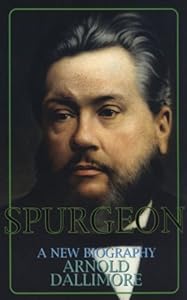
Book Review: Spurgeon: A New Biography, by Arnold Dallimore

As a pastor, I have an incredibly high admiration for the life and ministry of Charles Spurgeon. His preaching, writing, and leadership stand out among the all-time greats of Christian history. Were I to be granted a "double portion" of any one man's spirit, as Elisha sought from Elijah, I might just choose C.H. Spurgeon.

This biography by Arnold Dallimore is an excellent introduction to the life and ministry of the "Prince of Preachers." Reading through this brief work will give the reader a swift but sufficient introduction to the primary life events, theological moorings, and major accomplishments of this stalwart Christian hero.

As Dallimore traces the incomparable Spurgeon from his progenic childhood, beyond his meteoric rise as a young Baptist pastor, and through his grueling sufferings of both body and soul (the Downgrade Controversy was especially wearing on the London Calvinist), the reader gets the impression that Spurgeon was nearly apostolic.

In fact, the reason that I gave this work four stars instead of five is that it verges on hagiography. Throughout, nearly the only "weakness" that Dallimore can detect in the life of C.H. Spurgeon is that he smoked cigars and had an alcoholic beverage from time to time! Certainly, this work is an attempt, however admirable, to cast Spurgeon in the purest of lights and to give him his due among the venerable men of Christian history.

I too love much about Spurgeon: his pleading for souls, his resistance to the creeping influence of liberal theology, and his ardent defense of Calvinism and the doctrines of our Puritan forefathers. But as a pastor myself, I might have been even MORE encouraged (if that were possible) to hear about a single time that Spurgeon had failed at something--even if just once in his life!

Instead, Dallimore casts Spurgeon as almost impeccable in both life and character. "The man who lived in CONSTANT fellowship with God manifested in his daily life ALL the fruits of the Spirit. Here love, joy, peace, patience, kindness, goodness, faithfulness, gentleness, and self-control were EVER present, and with them there was a hatred of their opposites--a loathing of EVERY form of sin" (p. 179, emphasis added). Wow.

I left the book wondering: did Spurgeon have any Achilles heal at all? Did he succeed as a father and husband as he did as an author and mega-church pastor? (Notably, almost nothing is said of Spurgeon raising his sons in the home). Did the unfaltering success of his publications and preaching success ever cause him to need to repent of pride?

Dallimore's work was thorough, interesting, and compelling throughout. Overall, I would highly recommend this work as a good introduction to C.H. Spurgeon, but I would caution all who read it to not compare themselves too rigorously to Dallimore's protagonist. None of us will be able to stand next to him.

Matthew Everhard is the Senior Pastor of Faith Evangelical Presbyterian Church in Brooksville, Florida.

Friday, October 26, 2012

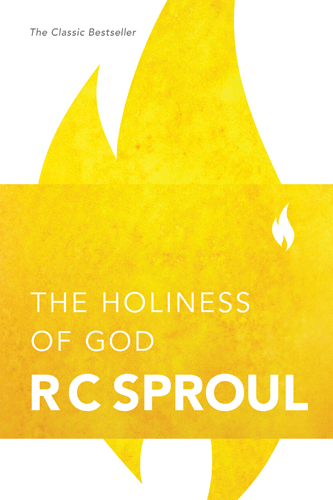
Book Review: R.C. Sproul. The Holiness of God.

The Holiness of God by R.C. Sproul is a classic in Reformed devotional literature. I would heartily recommend this work to all thoughtful Christians who are pursuing the glory of God.

The purpose of this work is to reignite a passion for worship and service of God fueled by a love for His full majesty and divine worth. In this book, Sproul masterfully shakes the reader out of his complacency by reminding him of God's utter power, absolute Lordship, and incomparable purity.

In each chapter, Sproul smashes the brittle world of generic evangelicalism with the hammer of biblical authority. When much of the evangelical world is trying desperately to cast God as either an unimposing grandfatherly figure, a divine butler waiting to assist needy persons, or a motivational guru intent on building our self esteem, Sproul has instead reminded us that such flippancy is entirely inappropriate to Biblical worship.

In chapter after chapter, Sproul sets out to prove that "the Lord your God is a consuming fire, a jealous God" (Deuteronomy 4:24, cf. Hebrews 12:29) and is still the same God who struck down Uzzah for touching the ark (2 Samuel 6:7), and Nadab and Abihu for offering strange fire (Leviticus 10).

Of course, Sproul does not want to create unmitigated fear in the believer's heart, but rather to reveal the ultimate reason why Christ had to die on the cross as an atoning propitiation for our sins: God's holiness demanded the cross since sin is "cosmic treason" against His authority, Lordship, and purity.

Sproul's chapter on Martin Luther's insanity is particularly masterful. Here, he shows how "insane" Luther really was: he saw the holiness of God and his own frailty in comparison more clearly than most. Sproul intends to show that what appears to be mental brokenness on the part of the great German Reformer was actually his ability to retain a far more accurate spiritual perception of the transcendence of God.

Thankfully, Luther was driven to the cross of grace. So too should we be driven to the foot of the cross by the impending wonder of God's holiness.


Matthew Everhard is the Senior Pastor of Faith Evangelical Presbyterian Church in Brooksville, Florida. Please consider following on Twitter at @matt_everhard.

Monday, October 1, 2012

Book Review: The Biography of Robert Murray M'Cheyne. By Andrew A. Bonar.

Every once in a while, I finish a book that, the very act of finishing the last page, makes me feel that I have just lost a dear friend. This is especially true for me in biographies wherein the protagonist dies an early and untimely death.

Such was the case of the biography of Robert Murray M'Cheyne (1813-1843) by his contemporary Andrew A. Bonar. At the end of the book, at M'Cheyne's early death at age 30, I found my own soul crying out to God in grief for a lost friend.

M'Cheyne a young Presbyterian pastor in the town of Dundee, Scotland seems to have been one of those rare souls who continually lived in the conscious, joyful presence of God. His own kindred spirit, Andrew Bonar, does an admirable job of capturing the essence of a young pastor who seemed to have had two passions above all things: a zeal for personal holiness and devotion, and an unquenchable desire to save souls.

Clearly the author (Bonar) wrote this work as a eulogy for the life of a close friend. In that sense, it is far from objective. Picking up this work for the first time, the reader must realize that these pages were written to memorialize a man dearly loved by the author. It was not meant to be an evenhanded critique of M'Cheyne's successes and failures as a minister. The author, therefore, is not concerned to set out in public view the many shortcomings that M'Cheyne saw resident within his own soul.

Having said that, the biography itself is a stirring first-hand recollection of one of nineteenth century Scotland's most fire-baptized preachers. As M'Cheyne's closest mortal friend, Bonar was privileged to have access to many of his personal affects. Within this book, the reader finds an equal mixture of quotations from M'Cheyne's extant letters, poetry, journal entries, sermon manuscripts, and no short supply of his more lively verbal quotations.

Bonar stirringly traces the life of his protagonist from his birth, to his immense grief at his brother's death as a young man, to his ordination in the church of Scotland, to his charge in the Dundee church, to his evangelistic mission to Israel to preach the gospel to the Jews, to his participation in the revival fires of Scotland, and finally to the stirring account of his death.

The reader is constantly refreshed in his own walk with the Lord as we hear M'Cheyne preach passionately to his own people both from the pulpit and by house-to-house interviews. One gripping event was moving to this reviewer (himself a pastor): when M'Cheyne and Bonar returned from their life's great mission-adventure to Israel, M'Cheyne found that the interim pastor had been used of God to spark a revival in the church he himself loved so dearly. Rather than fight a deadly jealousy within his own soul that God had so used another man, M'Cheyne praised God knowing that the salvation of his people's souls is infinitely more valuable than his own reputation as a preacher. 

Throughout, M'Cheyne is imminently quotable, and many of his gems are so striking to the reader so that he is forced to put the book down and engage in prayer himself:
  • "I fear the love of applause...May God keep me from preaching myself instead of Christ crucified." 
  • "Rose early to seek God and found Him whom my soul loveth. Who would not rise early to meet such great company!...They that sow in tears shall reap in joy."
  • "Never see the face of man till you have seen His face who is our life, our all." 
  • "It has always been my aim, and it is my prayer, to have no plans with regard to myself, well assured that I am, that the place where the Savior sees fit to place me must ever be the best place for me." 
  • "I see a man cannot be a faithful minister until he preaches Christ for Christ's sake--until he gives up striving to attract people to himself, and seeks only to attract them to Christ. Lord give me this!"
M'Cheyne was a man whose doctrine was solidly rooted in the Confession of his Presbyterian tradition. He openly confesses his love for the Westminster Confession of Faith and its doctrine while at the same time cherishing the very presence of Christ alone in the "secret" places of his study. As a divine, M'Cheyne preached with full vigor both the electing grace of predestination, and the responsibility of man to repent and believe the Gospel. His doctrine of election, therefore, did not quench his zeal for evangelism. (It never should, of course).

Impact
Two things will be of lasting worth to me having read this biography.

First of all, in the waning pages of his biography, Bonar includes an unfinished manuscript of M'Cheyne's own pen called "Reformation." Here, the young pastor wrote out his own guidelines for seeking personal holiness, especially through the God-ordained means of confession of sin. These short pages are a masterpiece of self-reflection, mortification of the flesh, renunciation of the world, and the grace of repentance. He begins, "I am persuaded that I shall obtain the highest amount of personal happiness, I shall do most for God's glory and the good of man...by maintaining a conscience always washed in Christ's blood." Anyone who seriously pursues holiness would do well to put into practice the recommendations with which M'Cheyne charges himself.

 Secondly, among his poems, "Jehovah Tzidkenu" must surely be his greatest. Here, he writes of the obstinacy of the human heart, the free grace of God in Christ, and the treasure of salvation. He writes,

I once was a stranger to grace and to God,
I knew not my danger, and felt not my load;
Though friends spoke in rapture of Christ on the tree,
Jehovah Tsidkenu was nothing to me.

I oft read with pleasure, to sooth or engage,

Isaiah´s wild measure and John´s simple page;
But e´en when they pictured the blood sprinkled tree
Jehovah Tsidkenu seemed nothing to me.

Like tears from the daughters of Zion that roll,

I wept when the waters went over His soul;
Yet thought not that my sins had nailed to the tree
Jehovah Tsidkenu"”´twas nothing to me.

When free grace awoke me, by light from on high,

Then legal fears shook me, I trembled to die;
No refuge, no safety in self could I see"”
Jehovah Tsidkenu my Saviour must be.

My terrors all vanished before the sweet name;

My guilty fears banished, with boldness I came
To drink at the fountain, life giving and free"”
Jehovah Tsidkenu is all things to me.

Jehovah Tsidkenu! my treasure and boast,

Jehovah Tsidkenu! I ne´er can be lost;
In thee I shall conquer by flood and by field,
My cable, my anchor, my breast-plate and shield!

Even treading the valley, the shadow of death,

This "watchword" shall rally my faltering breath;
For while from life´s fever my God sets me free,
Jehovah Tsidkenu, my death song shall be.

Matthew Everhard is the Senior Pastor of Faith Evangelical Presbyterian Church in Brooksville, Florida. Follow on Twitter @matt_everhard.

Friday, September 28, 2012

Book Review: C. Stephen Evans. "Philosophy of Religion: Thinking About Faith."

In this short book, C. Stephen Evans has done an admirable job of making the incredibly complex world of the philosophy of religion attainable to new students in this field. As such, this work would make a very helpful textbook at the introductory college level. Throughout this work, Evans does a remarkable job of defining the seemingly unending array of technical verbiage, while giving helpful illustrations to explain their usage to the reader.

"Philosophy of religion," as a technical term, is the particular branch of philosophy which, as its name suggests, grapples with religious truth claims and beliefs through the grid of reason and logic. Among the topics covered in this book are:
  • the classical "proofs" for the existence of God, 
  • the validity of religious experience, 
  • the nature and possibility of miracles, 
  • particular objections to theism (such as evil and the apparent contradictions of science), 
  • and the unsettling difficulties related to religious pluralism.
Each one of these topic could easily fill an entire volume.
In this reviewer's opinion, the most helpful aspect of this work is the way that Evans fairly and evenhandedly deals with skeptics' attacks on theism. While Evans eventually does show the rationality of theism (and particularly Christianity) in each chapter, I don't think anyone could accuse Evans of attempting to deal with the skeptic's challenges unfairly or impatiently. Where he sees weaknesses in the theistic position, he does not attempt to hide them. Where he sees strengths, he likewise argues back with equal force. 

No chapter of this book should be seen as an outright apologetic defense of theism in general or Christianity in particular. It is not a book on apologetics. On the other hand, Evans does his best to show over and over again that belief in God is rational, logical, and coherent in the face of a number of threats and claims to the contrary.

In his chapter on the classical proofs for God's existence, for instance, Evans does not pretend to claim that any one 'proof' would compel all rational thinkers. On the contrary, he does assert that the preponderance of the evidence points in a cumulative way towards the existence of God. Likewise, in his concluding chapter on religious pluralism, he admits that Christians in particular have appeared to be arrogant in their claims of religious exclusivity, and yet he concludes this book by acknowledging the inherent humility of Christianity, even as it regards our evangelistic mission.

In conclusion, I think three groups of readers will find this book helpful.

1) First, the student who is interesting in determining for himself whether theism in general and Christianity in particular holds any water logically and rationally; 2) secondly, the non-theist who has many skeptical reasons to deny the validity of religious faith, but who nonetheless is open to reviewing his presuppositions; and 3) finally, the pastor who is interested in presenting some of the logical basis and rationale for Christianity to his congregation in an accessible manner.

Matthew Everhard is the Senior Pastor of Faith Evangelical Presbyterian Church in Brooksville, Florida. Please consider following on Twitter @matt_everhard.


Thursday, September 20, 2012

Book Review: Charles Spurgeon. A Defense of Calvinism.

A Defense of Calvinism is a brief tract written by the preeminent Charles Spurgeon (1834-1892), long considered to be the Prince of Preachers.

Although many Christians today recognize Charles Spurgeon as one of the most able preachers, and certainly among the most quotable pastors of all time, and certainly the last 200 years, most do not realize that he was also an ardent Calvinist.

Although Spurgeon rarely mentions John Calvin by name in his sermons, and quotes him directly rarer still, this small booklet was meant to show his own unequivocal alignment with traditional Reformed Theology ("Calvinism") as against the Arminianism and Hyper-Calvinistic trends of his own day.

In this brief work, Spurgeon defends the doctrines of total depravity, election, limited atonement, and perseverance on Biblical and logical grounds. Here, he explains that the doctrine of the Reformers (and Calvin in particular) is nothing other than the Biblical theology of Jesus, Paul, and the Apostles.

At the end of this tract, Spurgeon explains how the sovereignty of God in election does not in any way stand in opposition to the doctrine of human responsibility, and does not preclude man as a moral agent, responsible for his own sin.

This short work will not likely take the reader any more time than half an hour, and will greatly enhance his understanding of Spurgeon's theological foundations as well as that of Calvinism.

Matthew Everhard is the Senior Pastor of Faith Evangelical Presbyterian Church in Brooksville, Florida.

Friday, September 14, 2012

10 Free E-Books (You're Welcome!)

In light of my recent post on the benefits of having a Kindle or other e-reader, I thought I would post some of the best works of theology and fiction that you can get free (read: no cost) on your device.

No strings attached....Seriously.

  1. The ESV Bible. The ESV is the best English translation available today. Thank goodness that Crossway publishers is more concerned with giving away the Gospel than making money!
  2. John Bunyan. Pilgrim's Progress. The classic allegory of "Christian" who is making his way from the City of Destruction to the Celestial City. Read my review of this work here.
  3. Andrew Bonar. The Biography of Robert Murray M'Cheyne. RMM was a Scottish Presbyterian pastor in the 1800's. As a poet and preacher, M'Cheyne inspired multiple generations of Christians with his selfless devotion and warm piety.
  4. Johann David Wyss. The Swiss Family Robinson. Read a good classic aloud to your children once in a while. This work is full of surprising lessons about Christian discipleship.
  5. A.W. Tozer. The Pursuit of God. One of the classic works of spiritual formation in the last century. Long before Piper wrote Desiring God, Tozer was speaking on the God-exalting life from a Chicago pulpit.
  6. Martin Luther. Small Catechism. One of the great didactic works for children. A surprisingly relevant discussion on the central tenets of Christianity.
  7. Jonathan Edwards. Selected Sermons. Newbies will find Edwards' sermons to be the easiest and most accessible works that the great American Puritan wrote from New England centuries ago.
  8. J.C. Ryle. A Sketch of the Life and Labors of George Whitefield. A simple and short read on the basics of one of history's most revered evangelists.
  9. John Foxe. Foxe's Book of Martyrs. The classic work on the lives of many of Christ's martyrs.
  10. Robert Louis Stevenson. The Strange Case of Dr. Jekyll and Mr. Hyde. I love this fictional work, so I threw it in here. Stevenson gives us a most unusual glimpse into the doctrine of total depravity.
 You're welcome. If you really want to pay me back for all this free stuff, just follow me on Twitter @matt_everhard. We'll call it even!

Matthew Everhard is the Senior Pastor of Faith Evangelical Presbyterian Church in Brooksville, Florida.

Saturday, September 8, 2012

Book Review: John Bunyan. Pilgrim's Progress (Free Kindle Edition)

I have just now completed the Pilgrim's Progress for the third time and have loved it more with each reading. This small allegory is a classic piece of Puritan literature and a devotional masterpiece.

In this allegory, Bunyan traces Christian (representing all true believers who follow Jesus Christ) from the City of Destruction all the way to the Celestial City. After experiencing the weight of the burden of his sin, Christian is converted when the weight of his guilt falls off upon seeing the cross and the empty tomb. With the help of his allegorical sojourners--Evangelist, Help, Faithful, and Hopeful--the protagonist is able to persevere through unimaginable trials.

Christian endures the Slough of Despond, the Valley of Humiliation, fights off the foul demon Apollyon, watches Faithful's martyrdom, and survives imprisonment at Doubting Castle despite the tortures of the Giant Despair.

Throughout the work, Bunyan, himself an imprisoned Puritan during times of severe religious persecution, is instructing Christians on the great doctrines of the Christian religion: perseverance, true faith, the means of grace, spiritual warfare and more.

I found that the Kindle Edition was laid out well, the search features worked adequately, and the page enumeration was available in addition to location numbers for academic citations. Though some may find the original language archaic (King James-ish), my prayer is that this masterpiece will be rediscovered by another generation of modern pilgrims.

Matthew Everhard
Senior Pastor, Faith Evangelical Presbyterian Church

Book Review: J.I. Packer. A Quest for Godliness.

I cannot imagine anyone more qualified to write on the Puritan vision for godliness than one of the eminent theologians of our day, the revered J.I. Packer. With lucidity and skill, Packer takes the reader through a brief history of the Puritan life and purpose. And yet this work is not strictly an historical work. Much of the genius of this book is in Packer's ability to take the reader into the inner workings of the Puritan mind.

Like a expert mechanic, Packer opens up the hood and shows the student the "engine" and its component parts within the Puritan worldview. Subjects such as the conscience, revivalism, preaching and the sermon, spiritual gifts, the Lord's Day, and marriage and family are all addressed with thorough documentation.

One of the special features of this work are the copious quotations from the original source writings themselves. In each and every chapter, Packer brings the reader into a close-encounter with the very men he calls the "Redwoods" of Christian theology. (Foremost among them are Owen and Baxter, over whose works Packer demonstrates thoroughgoing mastery). New readers in this field will find that, having completed this book, they have already met a few of the Puritans first-hand.

Rev. Matthew Everhard, Pastor, Faith Evangelical Presbyterian Church. Brooksville Florida.

Book Review. Bruce Little (Ed.). Francis Schaeffer: A Heart and Mind for God

Francis Schaeffer: A Mind and Heart for God was not exactly what I thought it would be when I purchased this brief book. Judging by the subtitle on the cover (a proverbial error!) I suspected this tiny work of about 100 pages would be a mini-biography of the great apologist. It was not. This is not to say that I was disappointed, however.

Instead the book contains five brief chapters that were given at a conference on the life and thought of Francis Schaeffer. Notable among the contributers are Udo Middleman (would that more parents name their children Udo!) the son-in-law of Rev. Schaeffer, and a key expert on his personal life as well as his theology.

Also memorable were the two essays presented by Jarram Barrs, a former L'Abri student of Schaeffer, and now one of the foremost experts on Schaeffer studies at Covenant Theological Seminary in St. Louis.

Dick Keyes presents a well-written article on Sentimentality at the end of the book, although it is not directly connected with Schaeffer, other than that Keyes suggests this is the kind of work that Schaeffer might have done had he been alive today. Perhaps. The inclusion of this essay, while helpful, certainly bore little relevance to the title or subtitle of the book.

While I was hoping for a short biographical introduction to the life of Schaeffer, these brief chapters gave some helpful context to shed light on some of Schaeffer's own books.

Matthew Everhard is the Senior Pastor of Faith Evangelical Presbyterian Church in Brooksville Florida