Showing posts with label gospel. Show all posts

Saturday, March 15, 2014

A Dying Man to Dying Men: Listening to the Final Words of an Eternity-Bound Believer

 -I preach as a dying man to dying men. (Puritan, Richard Baxter)
Today a few men from my church and I had the most extraordinary experience.

We listened in as one of our own dear saints gave his final testimony to a small group of his close friends.

For years, the Men of Faith group has been closer than brothers, and most of us realized that this would be the final time we would see John during this mortal pilgrimage.We sat in the Sunday School classroom as he spoke to us with the conviction of a saved man, the glorious tastes of the Wedding Feast of the Lamb already upon his lips.

If the doctors are right, he has but a couple weeks to live. Almost certainly, this was his last visit to Faith Church. I found the words of this once seemingly invincible welder (John is 6' 8'' in height, but now mostly confined to his wheelchair) to be gripping and inspiring. We all sat with baited breath as he spoke to us with the assurance of a prophet and the erudition of an apostle.

"I have absolutely no fear of dying," he said. "None."

The words of Richard Baxter quoted above were fixed in my heart as he exhorted us. He was truly speaking "as a dying man to dying men." Notable among his words--brief and poignant as they were--are a few monumentally significant thoughts I would like to relate to everyone. 

1. Eternity is closer than it appears. John isn't the only man who will be entering eternity soon. We all will. For all we know, any one of us might go before him! For all of us, this mortal life passes quicker than we realize. James says it is like a mist or vapor (4:14). It is incredible how the priorities of this life sort themselves out so quickly when Heaven is in close view. The brevity of life is fleeting. Will we be as ready as John to enter the presence of our Creator and Judge? John's readiness for the eternal gates comes not from self-assurance, but from self-abandoning faith in Jesus Christ.

2. Men, lead your family in the faith. John spoke with power and honesty when it came to leading one's household as a man of God. Regrets? Of course. We all will wish that we were better husbands and father's when we reach the threshold of the eternal city. How we loved our wives and lead our children during this life will be so much more valuable than possessions!

Remarkably, John never once spoke of the importance of "things," and the silence on this matter was deafening from a man whose house once burned to the ground along with every earthly possession! His leadership of his family in the Lord, however, seemed to weigh heavy on his lips.  

Oh how all of us will wish we had been more consistent in prayer, devoted in Scripture, and relentless in catechizing our children in the truths of the Christian faith!

3. Share the gospel without fear. What struck me most was John's encouragement to banish fear from our lives, especially as it comes to sharing the saving truth of the Gospel. John boasted that he "feared no creature on planet earth with a heartbeat," and yet acknowledged that sharing Christ with others was sometimes intimidating.

Although John often witnessed by word and deed to the other welders at work, he admitted that it was not without some trepidation! All of the men in the room (including this pastor) agreed. And yet he bade us not to fear sharing the Gospel of Christ, as this present life will soon give way to eternity. "Where will fear be then?" he asked.

After about twenty minutes of sharing, John retired to the sanctuary of the church to film his own funeral message. He hoped to impact the lives of as many as possible. John prayed that many would receive his words--arrows shot straight from his heart to ours--as pleas to trust and believe the Gospel as well as to lead like men of courage.

Rarely have I seen a man speak so clearly and absolutely under the influence of the Holy Spirit! After we filmed his testimony, we wheeled him to the car. I hugged him goodbye and we parted, likely for the last time on this earth. 

Dear readers: Time flees. Eternity beckons. Life is short. Kids grow up fast. The sand in the hourglass drops relentlessly. That is, of course, until we enter the world in which time is of no consequence.

Thank you, John, for being a faithful witness.

--Pastor Matthew Everhard is the Senior Pastor of Faith Evangelical Presbyterian Church in Brooksville, Florida.

Monday, December 3, 2012

Evangelical or Evan-jellyfish?

"Evangelical." We all use the word. We rarely define it. 

The Greek New Testament term, from which our modern word derives, means an announcement of good news. A herald's joyful cry.

In NT usage, it refers specifically to what we call the Gospel--the euangellion--the good news of the life, death, and resurrection of Jesus Christ.

When Martin Luther broke away from the Roman Church in the Reformation, he initially intended his followers to be called "Evangelicals." He meant to identify those who believed in grace alone, through faith alone, in Christ alone.

Unfortunately, the term did not stick, and his movement became known as the Lutheran movement.

Today, however, the term has lost all formal resemblance to either NT or Reformation usage. It has become a "wax nose," able to be shaped and reshaped as one pleases. For some, it is a voting block of conservatives (most often associated with the Republican Party).

For others, it means non-denominational Christianity,  i.e. generic doctrine divorced from the specificity of credal and confessional Christianity.

J.C. Ryle (1816-1900) gave one of the best warnings I have heard regarding this kind of doctrinally vague Christianity. He said, generic doctrine...

"...is an epidemic which is just now doing great harm, and especially among young people. . . . It produces what I must venture to call . . . a 'jelly-fish' Christianity . . . a Christianity without bone, or muscle, or power. . . . Alas! It is a type of much of the religion of this day, of which the leading principle is, 'no dogma, no distinct tenets, no positive doctrine.'
We have hundreds of 'jellyfish' clergyman, who seem not to have a single bone in their body of divinity. They have no definite opinions . . . they are so afraid of 'extreme views' that they have no views of all.
We have thousands of 'jellyfish' sermons preached every year, sermons without an edge, or a point, or corner, smooth as billiard balls, awakening no sinner, and edifying no saint. . . .
And worst of all, we have myriads of 'jellyfish' worshipers—respectable Church-gone people, who have no distinct and definite views about any point in theology. They cannot discern things that differ, any more than colorblind people can distinguish colors. . . . They are 'tossed to and fro, like children, by every wind of doctrine'; . . . ever ready for new things, because they have no firm grasp on the old."(1)

If by "evangelical" you mean the strand of believer who holds fast despite the cost to the great and ancient doctrines of the NT: atonement, justification, repentance etc, count me as one.

But if by "evangelical" you mean a generic, feel good, self-improvement, entertainment-based form of Christianity, then just call me Reformed.


Matthew Everhard is the Senior Pastor of Faith Evangelical Presbyterian Church in Brooksville, Florida.


(1)  From an excellent sermon on the life of J.C. Ryle by John Piper. http://www.desiringgod.org/resource-library/biographies/the-frank-and-manly-mr-ryle-the-value-of-a-masculine-ministry

Friday, October 26, 2012

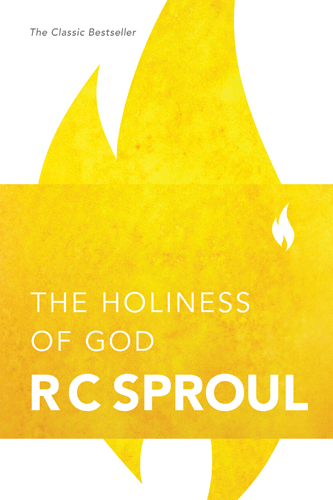
Book Review: R.C. Sproul. The Holiness of God.

The Holiness of God by R.C. Sproul is a classic in Reformed devotional literature. I would heartily recommend this work to all thoughtful Christians who are pursuing the glory of God.

The purpose of this work is to reignite a passion for worship and service of God fueled by a love for His full majesty and divine worth. In this book, Sproul masterfully shakes the reader out of his complacency by reminding him of God's utter power, absolute Lordship, and incomparable purity.

In each chapter, Sproul smashes the brittle world of generic evangelicalism with the hammer of biblical authority. When much of the evangelical world is trying desperately to cast God as either an unimposing grandfatherly figure, a divine butler waiting to assist needy persons, or a motivational guru intent on building our self esteem, Sproul has instead reminded us that such flippancy is entirely inappropriate to Biblical worship.

In chapter after chapter, Sproul sets out to prove that "the Lord your God is a consuming fire, a jealous God" (Deuteronomy 4:24, cf. Hebrews 12:29) and is still the same God who struck down Uzzah for touching the ark (2 Samuel 6:7), and Nadab and Abihu for offering strange fire (Leviticus 10).

Of course, Sproul does not want to create unmitigated fear in the believer's heart, but rather to reveal the ultimate reason why Christ had to die on the cross as an atoning propitiation for our sins: God's holiness demanded the cross since sin is "cosmic treason" against His authority, Lordship, and purity.

Sproul's chapter on Martin Luther's insanity is particularly masterful. Here, he shows how "insane" Luther really was: he saw the holiness of God and his own frailty in comparison more clearly than most. Sproul intends to show that what appears to be mental brokenness on the part of the great German Reformer was actually his ability to retain a far more accurate spiritual perception of the transcendence of God.

Thankfully, Luther was driven to the cross of grace. So too should we be driven to the foot of the cross by the impending wonder of God's holiness.


Matthew Everhard is the Senior Pastor of Faith Evangelical Presbyterian Church in Brooksville, Florida. Please consider following on Twitter at @matt_everhard.

Wednesday, September 19, 2012

Gnostic Nonsense

So, if you haven't heard, some more Gnostic papyri has been found, and surprise surprise, it seems to say that Jesus had a wife.  Read more here.

Discoveries like this are anything but new, though they are always touted to be of great importance.  If this scrap of paper does anything it reveals our general lack of knowledge on the whole subject.  However, that's not to say that an unbelieving friend may not still engage you on this subject.  "Hey!  Did you hear that Jesus may have had a wife?!  I wonder how that affects what the Bible says."  What would you say to a comment like that?  Most of us would have no idea where to start.  

Thankfully, Dr. James White, an actual expert on the subject, gives us some wise talking points and a few opinions of his own.   Enjoy!    A Note to the Secular World:  Do Your History

Wednesday, August 22, 2012

Biblically Responding to Those in Sin...

First of all, we must begin with our own propensities toward sin. God’s Word tells us that “all have sinned” (Romans 3:23) and that includes you and me. That knowledge of ourselves should create a sense of humility in how we respond to others. You see, if I realize my own struggles with sin and am broken by that fact, I will tend to be much more compassionate in how I respond to others in sin. I will find it easier to “speak the truth in love” (Ephesians 4:15) because I am all too aware that I am also flawed.

However, should a knowledge of our own sinfulness cause us to remain indifferent to sin and sinners? Since we are flawed, should we sit back and allow sin to run amok? Of course not. If so, what did Jesus mean when He told us to be salt and light (Matthew 5:13-16)? To be salt and light means that we are to hold back sinful decay and expose it wherever it may be. There is no room for indifference.

So, as we are salt and light, do we treat saved people who are engaged in open, known sin the same as we do lost people who are engaging in the same exact sins? No.

Look at 1 Corinthians 5:9-13:

“I wrote to you in my letter not to associate with sexually immoral people – not at all meaning the sexually immoral of this world, or the greedy and swindlers, or idolaters, since then you would need to go out of the world. But now I am writing to you not to associate with anyone who bears the name of brother if he is guilty of sexual immorality or greed, or is an idolater, reviler, drunkard, or swindler – not even to eat with such a one. For what have I to do with judging outsiders? Is it not those inside the church whom you are to judge? God judges those outside. ‘Purge the evil person from among you.’”

If someone who claims to be a believer is engaged in sexual immorality, is greedy, has a lifestyle that shows he worships anything other than God, slanders others, is an alcoholic, isn’t honest in his financial dealings, or any number of other known, open sins, I’m not supposed to even eat with him. However, if someone who is unsaved does those same things, I can absolutely spend time with him as I seek to tell him the message of the Gospel.

Quite simply, unsaved people are going to act like unsaved people. How else should we expect them to act? They need the Gospel. So spend time with them!

But someone who claims to be a follower of Christ? Now, that’s a different story. He should know better. He claims to already have the Gospel. There’s nothing else besides what he already claims to have. So, measures are to be taken. Out of love for him and a concern for his eternal destination, we are to remove him from the protective blessings of the church (1 Corinthians 5:2) and avoid any interaction that would show acceptance of his behavior (1 Corinthians 5:11).

Why is this loving? Because in being removed from the protection and blessings of a church fellowship, he may come to the end of himself and come back to Jesus! “You are to deliver this man to Satan for the destruction of the flesh, so that his spirit may be saved in the day of the Lord.” (1 Corinthians 5:5). The desired end result is not negative. It’s restoration!

Can it truly be said that we are compassionate Christians if we don’t lovingly confront our brothers and sisters-in-Christ, when they are in sin, in the biblically appropriate way? Can it truly be said that we are compassionate Christians if we ostracize unbelievers who so desperately need the Gospel that we can share with them?
Matt Ellis is the Senior Pastor of the First Baptist Church in Brooksville, Florida.

Tuesday, June 5, 2012

Cheap Law and True Holiness


A Sermon Delivered at Dayspring Church June 3, 2012

Please turn to Matthew chapter 5, that’s where we’ll begin today.

What is the primary obstacle to understanding and being encouraged by the Proverbs? It’s when we take the amazing overflowing wisdom, the gathered gold of the Proverbs and we cheapen it.  

Bonheoffer talked about Cheap Grace in his writings; Cheap Law is the idea that the law of God, such as the proverbs we have before us today, can be satisfied by anything other than the righteousness of Christ. Cheapening the law makes the Christian life doable and makes Jesus an accessory, a co-pilot, that we bring in when we need help, but otherwise unnecessary.

What’s wrong with making the moral side of Christianity seem doable? People like lists, they like programs, they like it when everything is nice and packaged and when it feels possible to obey God in the coming week. I know congregations like it when there are three points and they rhyme but I tend to resist that unless the text demands it because it communicates something that is not true—that the Christian life is neat and tidy and doable. All the famous pastors with big churches use this technique, but look at Jesus’ list in the NT. Matthew 5 is one. Turn to Matthew 5 please. Here Jesus gives God’s high standard for life and love in the New Covenant, he re-tells the law from the perspective of the New Covenant and rather than doing away with the law, repurposes it.

“Do not think that I have come to abolish the Law or the Prophets; I have not come to abolish them but to fulfill them.18 For truly, I say to you, until heaven and earth pass away, not an iota, not a dot, will pass from the Law until all is accomplished. 19 Therefore whoever relaxes one of the least of these commandments and teaches others to do the same will be called least in the kingdom of heaven, but whoever does them and teaches them will be called great in the kingdom of heaven.20 For I tell you, unless your righteousness exceeds that of the scribes and Pharisees, you will never enter the kingdom of heaven.

So when we relax the law, when we make the Proverbs seem doable and make it seem easier to live the Christian life by smooth preaching, we are actually going against the intent of Jesus. Jesus gives a list in Matthew 5 [Blessed…blessed] and that list makes the new life in his new world order seem unattainable and he says that’s right, now you are getting it, the truths of Scripture are written so that I might fulfill them, not that you might fulfill them. Jesus seems to say that the rule and principles and truths of Scripture exist not that you might be more fit, but that I might more found, more glorious, more delightful! 

Proverbs used like a doable checklist end up like this, something to make us more fit, to make our business’ prosper and our families sound. We relax the Proverbs as Matthew 5:19 says, individually and as a group, so we can apply them mechanically and profit from them in this horizontal realm. But does that make us more holy in our soul? 

If we use the Proverbs merely as a means of self-improvement, then when we are improved, when our business is more efficient, when our homes are more manageable, when our children are properly disciplined, then we are done with them and they are done with us.
But if we use the Proverbs to reveal how our hearts are sinful, and how that leaks out into every area of life targeted by the Proverbs, and that we can’t fully obey any Proverb and any section of the law perfectly, then Jesus shines. Then Jesus is glorified and the gospel is revealed to be true.

If I cheapen the law, I don’t need the double-imputation of Christ—him giving me his righteousness, me giving him my sin—I don’t need that if I’ve got it all together. I don’t need that if the Proverbs and the rest of the Bible is just one big self-help book. I just need more will, more drive, more determination. But not more of Jesus.

Putting it positively, the Bible is designed to reveal our need for Christ and our need for the Gospel, and as we live for him and are guided by his inerrant, inspired book, we mature, and then our success, as well as our failure, reveals Christ, just as the success and failure of our heroes in Scripture does.

Let’s inspect Proverbs 24 today and see how this works. It’s very simple. You can either use these for simple self-improvement or you can take these principles and apply them to your heart and find new room for Christ there. You can be afraid of the consequences of ungodly living and so start applying the Proverbs out of fear, or you can start applying the Proverbs out of a desire for others to think you are spiritual, or you can apply them in such a way that reveals that Jesus is alive and well and matters in your heart and in your lifestyle and in your computer and bedroom and every part of your existence.

How do we do that? We read the negative Proverbs, warning us against sin, we ask, “How am I just like that?” And then we read it again and ask, “How is Jesus so sufficient, so marvelous, so awesome, that I never have to live and feel that way again?” Then true holiness happens, and we know it not primarily by our own feelings or experiences, but primarily because truth holiness is reflected in the law and the Gospel, in the assurances and the admonitions of Scripture. True holiness makes us more like Jesus, who, for the joy set before him, endured the cross.

Looking at our text today, notice as it was read that in this section of Proverbs, we don’t have couplets, but couplets of couplets, that should not be separated as we read them. Let’s look at one more section of this chapter.

Let’s look at Proverbs 24. Two sections that jumped out at me this week.

11 Rescue those who are being taken away to death;
    hold back those who are stumbling to the slaughter.
12 If you say, “Behold, we did not know this,”
     does not he who weighs the heart perceive it?
Does not he who keeps watch over your soul know it,
    and will he not repay man according to his work?

This is the traditional text used by a variety of pro-life ministries and Christian groups who reach out and try and help those who are in great danger. In our society, there are many activities and substances that can kill you. You can even die from doing nothing, just hanging out in your mother’s womb. I’m grateful we don’t have an abortion clinic in our community, but if we did, we could use this text to explain our Scriptural basis for it.

In its context, we don’t know for certain what historical situation this is referencing. They didn’t have abortion clinics back them. But the first audience of Proverbs was young men, being trained as princes in the royal court of Solomon, and they would have learned a great deal of information and science and technology of the day. With that wisdom and knowledge, they could not turn their back on the covenant community who was suffering, and then claim they were ignorant—God knew that they did and did not know. If there is someone in this congregation who is destroying themselves thoughtlessly, and ignorantly endangering themselves and their family, then we have to say something, because part of being linked together by Christ means helping those around us who are in trouble.

But that level of the proverb could be practiced by a Buddhist; an atheist could read the proverb on that level, bring it down to his own circumstances, and benefit from it. But that “relaxes” the proverb, making it helpful, but not redemptive, not gracious. This surface reading of it does not reveal my sin or reveal my Christ.  

But let’s go to the heart of why God included this in the Proverbs. I ask the reader--How are you just like this? Think on this for a moment before you continue.

Let’s go deeper into the heart of why God included this: How is Jesus revealed here to us in this previous text? Think on this a moment before you continue. 

One more text to consider:

19 Fret not yourself because of evildoers,
    and be not envious of the wicked,
20 for the evil man has no future;
     the lamp of the wicked will be put out.
21 My son, fear the Lord and the king,
    and do not join with those who do otherwise,
22 for disaster will arise suddenly from them,
    and who knows the ruin that will come from them both?

Obviously, the simple moral teaching of this text is to not worry about evil people, whether high up or low in society, and do not join with those who make it a habit. This calls into question the wisdom of joining one group or the other that is anti-Obama or anti-homosexual or even against drunk driving—this proverb warns that disaster can come from any situation, not just the political realm or from the obvious “bad people.”

But let’s read this with new eyes. How am I just like this? How does Jesus deal with the wicked, and what does this reality compel me to do? Contemplate this before you move on. 


In answer to the last question, Revelation 6:1 says this:

"Now I watched when the Lamb opened one of the seven seals..."

And each one of those seals are salvation for his people and judgment on the enemies of the church, which is the purpose of the book of Revelation. When Jesus sees injustice, he is patient, desiring all to repent, but does not wait any longer than necessary and then he acts. Look at the end of Revelation 6.

Then the kings of the earth and the great ones and the generals and the rich and the powerful, and everyone, slave[e]and free, hid themselves in the caves and among the rocks of the mountains, 16  calling to the mountains and rocks, “Fall on us and hide us from the face of him who is seated on the throne, and from the wrath of the Lamb, 17 for the great day of their wrath has come, and who can stand?”

This is how Jesus deals with those who refuse to repent. This is the most serious of matters we have before God--will we repent? Or hide sin and self? 

If you are not a God-worshiper, if you know you are not a Christian, even though you may be a member of a church, even though you may have been raised in the church, you know you don’t know Jesus personally, you don’t read the Bible ever, you don’t pray ever—if you live your life just fine without Jesus, then you need to be grateful. God could have dropped you on the floor at any time and he would have been within his rights. But he has delayed so you could repent, turn from your God-less life, and live a life centered on him through faith in the life, death, and resurrection of Jesus Christ, who took the sin of all God’s people upon himself and gave all his people his right standing, his righteousness, towards God. You don’t have to fear death, you don’t have to fear life, you don’t have to fear the political process—but you do have to fear God and his judgment.

Today at the Lord’s Table, we will learn about the joy of fleeing from God, to God, and being received at his table as we look at the original Passover found in Exodus 12. Let us pray.


General Comments at the Table
It is the Lord's Passover. 12 For I will pass through the land of Egypt that night, and I will strike all the firstborn in the land of Egypt, both man and beast; and on all the gods of Egypt I will execute judgments: I am the Lord. 13 The blood shall be a sign for you, on the houses where you are. And when I see the blood, I will pass over you, and no plague will befall you to destroy you, when I strike the land of Egypt.

At this table, just as in the ancient times, we celebrate God saving his people from his wrath that they deserved. This is how he can be just, and punish sin, and the justifier, who pardons sinners. And he invites pardoned sinners to this table today, a place of safety for his people, and destruction for those who have no appetite for Christ.

Sunday, June 3, 2012

Counting the Cost of Commitment


As they were going along the road, someone said to him, "I will follow you wherever you go." 58And Jesus said to him, "Foxes have holes, and birds of the air have nests, but the Son of Man has nowhere to lay his head." 59To another he said, "Follow me." But he said, "Lord, let me first go and bury my father." 60And Jesus said to him, "Leave the dead to bury their own dead. But as for you, go and proclaim the kingdom of God." 61Yet another said, "I will follow you, Lord, but let me first say farewell to those at my home." 62Jesus said to him, "No one who puts his hand to the plow and looks back is fit for the kingdom of God." -Luke 9.57-62 (ESV)
The parallel Scripture is found in Matthew 8.18-22. This section talks about a total commitment to Jesus Christ.  Both Matthew and Luke record this event.  Luke highlights the term “follow” in his account.  He also demonstrated the centrality of Christ in the heart and life of a believer.
In this passage, we see three interactions with Jesus.  First, an unnamed person says, "I will follow you wherever you go."  It reminds me of Luke 22.33 where Peter says, "Lord, I am ready to go with you both to prison and to death."  A rash statement.  The speaker, like Peter later on, makes a commitment without counting the cost. Jesus points out that commitment is not an easy thing; it has a price.  Jesus makes the man aware that there is hardship in following Him.  I do not believe this man went with Jesus.  There is nothing to indicate that he did, and the tone suggests that Jesus did not count the man as one of His twelve or even a follower at all. 

Many today are willing to say they are a Christian, or wear a 'Christian t-shirt', or even put a 'Christian bumper sticker' on their car.  However, they will not stand for Jesus in their lives.  They will not witness about Christ to others, they will consistently compromise with the worldliness they encounter (coarse joking at work, flirting with someone other than their spouse, gossiping, etc.) and they will not stand for Biblical morality in their personal lives.  That means they may be single and promiscuous, or demonstrate road rage, or use profanity consistently without a second thought- just to touch a few areas.  

I think this is well illustrated by the story of a man driving behind a car with a "Honk if you love Jesus!" bumper sticker on the car.  The man, being a Christian, honked.  Just a mere second later a hand came out of the driver's window with a 'one finger salute' (extended middle finger).

Jesus called us to commitment, not comfort.  The fact that we can, thus far, be comfortable in our Christianity is a fading Western phenomenon.  Many parts of the world see Christians murdered, tortured and shunned for their faith in Christ.  At this time we have no such problem in most cases.  However, we better not get comfortable even with that.  Times may change and Christianity may become less comfortable one day.

The unnamed man in this Scripture make a verbal commitment that he probably has not thought through.  He has apparently not counted the cost.  That is most likely the reason for Jesus' response.

When we follow Jesus, we are taking on something we are totally unable to handle.  It is beyond our frail abilities.  It is a task requiring more than we may realize.  We can only follow Christ if He is empowering us. It is Christ who keeps us standing, as Jude 1.24-25 says so clearly, "Now to him who is able to keep you from stumbling and to present you blameless before the presence of his glory with great joy, to the only God, our Savior, through Jesus Christ our Lord, be glory, majesty, dominion, and authority, before all time and now and forever. Amen." (ESV)

The second person Jesus interacts with is the one He personally calls.  I believe that we do not decide on Christ, rather, He chooses us.  It is the Father who draws us into salvation.  It is by His grace that we are saved.  The punishment we so unmercifully deserve Jesus so mercifully received on our behalf when we receive Him.  Jesus, here, calls this man and says to him, "Follow me."  The man has his noble task to perform and let's Jesus know about it.  He must bury his father, as is the duty of the eldest son in the family at that time.

Despite the noble convictions the man is planning on fulfilling, Jesus makes one point very clear.  He must be the first priority.  Jesus puts it into perspective for the man.  He echos His teaching in Matthew 6.33, to "seek first the Kingdom of God."  God will take care of the rest.

Another point of interest is that Jesus makes what some may see as a callous statement.  He says to follow Him and to "Let the dead bury their own dead."  I believe this is a play on words.  The dead can refer to the spiritual state of the man's relatives.  Since their devotion is not to Christ, they are spiritually dead.  Let them take up the noble task of burying the man's father.  This man has a clear call on his life to follow and proclaim Christ.  There is no higher calling.

He, like those of us who have received Christ, was called to proclaim the Gospel.  Our call is found in Matthew 28.18-20, "Jesus came and said to them, 'All authority in heaven and on earth has been given to me. 19  Go therefore and make disciples of all nations, baptizing them in the name of the Father and of the Son and of the Holy Spirit, 20 teaching them to observe all that I have commanded you. And behold, I am with you always, to the end of the age.'" (ESV)

If we are called by Christ, we are called into a life of service to our Lord and King.  If we are called into such service, we are to follow Him even through suffering or death.  If an earthly leader has an army under his command, they are his servants.  If he orders them into battle they go and risk suffering or even death in battle for the sake of the king.  We, Christians, are called in the same manner as "soldiers of Christ Jesus," (2 Timothy 2.3-4) no matter the cost, we are to obey and follow Him.

Finally, there is one last man who interacts with Jesus in this passage.  This man tells Jesus that he will follow him once he bids his family farewell.  This is a reflection of Elisha's call to follow Elijah.  Elisha asked to go home and say goodbye and complete some things.  He was allowed to do so: 

So he departed from there and found Elisha the son of Shaphat, who was plowing with twelve yoke of oxen in front of him, and he was with the twelfth. Elijah passed by him and cast his cloak upon him. 20 And he left the oxen and ran after Elijah and said, “Let me kiss my father and my mother, and then I will follow you.” And he said to him, “Go back again, for what have I done to you?” 21 And he returned from following him and took the yoke of oxen and sacrificed them and boiled their flesh with the yokes of the oxen and gave it to the people, and they ate. Then he arose and went after Elijah and assisted him.   (1 Kings 19.19-21 ESV)
The people in Israel at this time were taught the Scriptures very thoroughly.  The man pledging to follow Jesus in this instance is most likely overstepping his bounds, being presumptuous, in likening himself to Christ.  Jesus did not give this man such a privilege.  Jesus responded to him that, "No one who puts his hand to the plow and looks back is fit for the kingdom of God.

As Jesus said in the second case, He is to be first priority.  If we say we want to follow Christ, but want to do something else first, we fail.  We are unworthy.  We are like a farmer who is plowing his field and looks back.  His rows are no longer straight.  He is messing up the task.  Likewise, if we look back, we are not worthy of the task.

Paul wrote to the church at Philippi, "Brothers, I do not consider that I have made it my own. But one thing I do: forgetting what lies behind and straining forward to what lies ahead, 14 I press on toward the goal for the prize of the upward call of God in Christ Jesus." (Philippians 3.13-14 ESV)  If we do anything but press on we are showing ourselves to be unworthy.  And we cannot press on without the empowerment of the Holy Spirit in our lives.  If God is not indwelling us, we are not His followers and we are powerless to live for Christ.

Two men called on Jesus.  They were not accepted, Jesus countered their pledges of commitment with a word of correction.  One man was called by Jesus.  When he was in error, Jesus corrected him and commissioned him.  Two did not count the cost.  One had the cost plainly explained to him.  By Jesus' interaction with that man, I believe he counted the cost and followed Christ as Jesus said he was called to do.

Have you counted the cost of being committed to Christ?  Are you taking this commitment seriously?  Examine your heart.  This is not something to take lightly.  The consequences are eternal.

Pete Garbacki is a minister with Time for Truth Ministries and Mission.Brasil.  Follow him on Twitter @mission_brasil or FaceBook at http://www.facebook.com/pete.garbacki.