Showing posts with label Spurgeon. Show all posts

Saturday, April 27, 2013

The Dangers and Delights of Christian Biography


The Dangers and Delights of Reading Christian Biography

Brothers, join in imitating me, and keep your eyes on those who walk according to the example you have in us (Philippians 3:17).

***

Be imitators of me as I am of Christ (1 Corinthians 11:1).

***

Dr. John Piper chose the above text from Philippians 3:17 when he gave the first ever “Charles Haddon Spurgeon” lecture at the Nicole Institute of Baptist Studies on the campus of Reformed Theological Seminary in Orlando, Florida. I was there to hear the lecture in person. His point was that just as Paul faithfully imitated Christ, and others likewise imitated Paul, so too we ought to continue that long chain of men and women who for generations have trailed after our glorious and Risen Lord.

For seventy minutes I sat in awe listening to one of my favorite living preachers waxing eloquent about one of my favorite dead preachers. This was pure joy to me, because for nearly twenty years I have been consumed with reading the biographies of famous Christians who have gone before me. Curiously and by some divine “coincidence,” I had just read the same biography on Spurgeon from which Piper apparently crafted his manuscript for that electric evening.

I cannot estimate how valuable to my soul these types of biographies have been over the decades, especially as a local church pastor.

During some years, I have chosen one particular man as my focal point and read as much as I possibly could both by and about him. I have especially focused on those from my own theological tradition whose perspective is often close to mine. I went through a Jonathan Edwards phase first, then a year or so in John Calvin, then a Francis Schaeffer period. Spliced in between these times I have grown close to other dead men as well: the Reformers and Puritans always foremost among them.

Strangely, these now-glorified saints have become my “friends.” Sometimes, particularly during seasons of mild depression and apparent ministry defeats, they have become closer to me than my actual friends. Perhaps some others reading these lines will share that strange trans-generational experience.

It is during these dark times that we find one of the most delightful serendipities of reading Christian biographies: we find that the exact same struggles that we have endured are not so terribly unique after all. There is no temptation—either of body or mind—that has not been experienced by another brother come before me. There is no malady of frame or soul that God has not called another believer to trudge through, long before I came along. The ability of previous generations to endure through suffering actually has the strange power of pulling me along through the midst of my own battles.

Too, I find that my unquenchable passion to be in the presence of the Holy One has been shared by a unique breed of men and women in whose footprints I now walk. When I read in 1999 of Hudson Taylor’s passion for the lost souls of China, I found a man who shared—and greatly excelled—the angst I felt for those who don’t know Jesus. Like him, I felt willing to cross land and sea to share the Gospel with even one unreached individual. Hudson Taylor lived and died for the lost!  

When I visited A.W. Tozer’s grave in Akron not far from where I grew up, and just a stone’s throw from my in-law’s home, I felt that I shared the same longing to delight in God’s presence as the man whose several books I had lately enjoyed.

Who would not be moved by the accounts of Edwards’ fiery preaching in the Great Awakening, or be taken up in the Luther’s joyous fear of declaring “Here I stand!” at the Diet of Worms? How could I avoid Calvin’s tender pastoral spirit “rubbing off” on me as he wrote tearful letters to men soon to be martyred for the faith in Reformation-era France? How could I not be stirred within when I read one of Spurgeon’s echoing sermons, still just as alive today as the day his voice dominated the Metropolitan Tabernacle in London? How could I not savor my English Bible more when I learned of all that William Tyndale endured to smuggle New Testaments into England in bales of hay? I wept at 1:00am when I read of Dietrich Bonheoffer’s martyrdom just weeks before the Second World War ended in a Flossenberg prison camp.  

But here is where I find the great danger: the more I try to be like these men, hoping to see the shape of my own life in their ever-lengthening shadows, the more I know I can never measure up.

I find that my very pursuit of “imitation” can be my greatest frustration. Have you ever tried to photocopy another photocopy before? The more generations away from the original we get, the worse the quality of the print becomes. In the same way, some of the biographies that we read tend to make the error of “hagiography,” they no longer produce accurate representations of the man and instead make them into saints: halo, wings, and all.

I must become content—even pleased, if I can be so bold—with the person God has made me to be.

“Hagiography” (literally: saint writings) is the spurious genre of trying to make another man into a complete saint. In the biography of Spurgeon I mentioned above, for instance, the author studiously avoided almost any critique of the man himself. In an almost forced confession to create the veneer of “objectivity,” the author finally admitted that Spurgeon (gasp!) smoked cigars! That was the only fault he could find!

And so as a reader, I am nearly driven to despair. Reading the account of a hero whose ministry only grew—all the time—made me wonder if there wasn’t something seriously wrong with me. My own ministry wasn’t growing at all. By the time we get more than a hundred years away from an historical figure, the more perfect his biographers seem to cast him. His weaknesses are glossed over, especially those which his wife and children probably knew best.  

Yes Calvin and Luther et. al. were geniuses in their times and greatly used of God in their unique age. But if I try to replicate the extraordinary acts of these men and women, I will find myself increasingly frustrated. These men, after all, were extraordinary, not because they were miniature “christs” themselves, but because God in His mercy saw fit to use them extraordinarily.  

It is simply not fair to compare ourselves with the all-time “greats,” or to expect that the unusual outpourings of God’s Holy Spirit ought to become usual in our day.

Yes, there are times when God’s Kingdom advances in very marked ways. The wheat grows quickly after the thunderstorms, but it also grows during more temperate weather as well. Even if more slowly. God is glorified as much by the ordinary, trudging, faithful ox in the field as He is by the brilliant lightning bolts that lead the storm.

To expect to have the computer-like mind of a John Calvin or the preaching unction of a Charles Spurgeon, or the audacity of Martin Luther is simply not a fair. True, we will continue to hope and pray for God to raise up such men that can shake our own generation out of its complacency, but to expect every faithful man and woman to change the world alone is not realistic.  

More realistic (and more Biblical) is to expect God to smack the world out of its lethargy by a thousand thousands of ordinary, unknown, average believers who are sincerely pursing the glory of Christ in their own day and generation.

God grant us to be among their number. Amen. 

...

The preceding essay is from Matthew Everhard's forthcoming book, Unknown: the World-Changing Power of Ordinary Christians. Matthew is the Senior Pastor of Faith Evangelical Presbyterian Church in Brooksville, Florida.

Monday, March 25, 2013

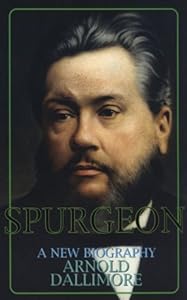
Book Review: Spurgeon: A New Biography, by Arnold Dallimore

As a pastor, I have an incredibly high admiration for the life and ministry of Charles Spurgeon. His preaching, writing, and leadership stand out among the all-time greats of Christian history. Were I to be granted a "double portion" of any one man's spirit, as Elisha sought from Elijah, I might just choose C.H. Spurgeon.

This biography by Arnold Dallimore is an excellent introduction to the life and ministry of the "Prince of Preachers." Reading through this brief work will give the reader a swift but sufficient introduction to the primary life events, theological moorings, and major accomplishments of this stalwart Christian hero.

As Dallimore traces the incomparable Spurgeon from his progenic childhood, beyond his meteoric rise as a young Baptist pastor, and through his grueling sufferings of both body and soul (the Downgrade Controversy was especially wearing on the London Calvinist), the reader gets the impression that Spurgeon was nearly apostolic.

In fact, the reason that I gave this work four stars instead of five is that it verges on hagiography. Throughout, nearly the only "weakness" that Dallimore can detect in the life of C.H. Spurgeon is that he smoked cigars and had an alcoholic beverage from time to time! Certainly, this work is an attempt, however admirable, to cast Spurgeon in the purest of lights and to give him his due among the venerable men of Christian history.

I too love much about Spurgeon: his pleading for souls, his resistance to the creeping influence of liberal theology, and his ardent defense of Calvinism and the doctrines of our Puritan forefathers. But as a pastor myself, I might have been even MORE encouraged (if that were possible) to hear about a single time that Spurgeon had failed at something--even if just once in his life!

Instead, Dallimore casts Spurgeon as almost impeccable in both life and character. "The man who lived in CONSTANT fellowship with God manifested in his daily life ALL the fruits of the Spirit. Here love, joy, peace, patience, kindness, goodness, faithfulness, gentleness, and self-control were EVER present, and with them there was a hatred of their opposites--a loathing of EVERY form of sin" (p. 179, emphasis added). Wow.

I left the book wondering: did Spurgeon have any Achilles heal at all? Did he succeed as a father and husband as he did as an author and mega-church pastor? (Notably, almost nothing is said of Spurgeon raising his sons in the home). Did the unfaltering success of his publications and preaching success ever cause him to need to repent of pride?

Dallimore's work was thorough, interesting, and compelling throughout. Overall, I would highly recommend this work as a good introduction to C.H. Spurgeon, but I would caution all who read it to not compare themselves too rigorously to Dallimore's protagonist. None of us will be able to stand next to him.

Matthew Everhard is the Senior Pastor of Faith Evangelical Presbyterian Church in Brooksville, Florida.

Thursday, September 20, 2012

Book Review: Charles Spurgeon. A Defense of Calvinism.

A Defense of Calvinism is a brief tract written by the preeminent Charles Spurgeon (1834-1892), long considered to be the Prince of Preachers.

Although many Christians today recognize Charles Spurgeon as one of the most able preachers, and certainly among the most quotable pastors of all time, and certainly the last 200 years, most do not realize that he was also an ardent Calvinist.

Although Spurgeon rarely mentions John Calvin by name in his sermons, and quotes him directly rarer still, this small booklet was meant to show his own unequivocal alignment with traditional Reformed Theology ("Calvinism") as against the Arminianism and Hyper-Calvinistic trends of his own day.

In this brief work, Spurgeon defends the doctrines of total depravity, election, limited atonement, and perseverance on Biblical and logical grounds. Here, he explains that the doctrine of the Reformers (and Calvin in particular) is nothing other than the Biblical theology of Jesus, Paul, and the Apostles.

At the end of this tract, Spurgeon explains how the sovereignty of God in election does not in any way stand in opposition to the doctrine of human responsibility, and does not preclude man as a moral agent, responsible for his own sin.

This short work will not likely take the reader any more time than half an hour, and will greatly enhance his understanding of Spurgeon's theological foundations as well as that of Calvinism.

Matthew Everhard is the Senior Pastor of Faith Evangelical Presbyterian Church in Brooksville, Florida.

Thursday, June 7, 2012

The Un-Precious Life


But I do not account my life of any value nor as precious to myself, if only I may finish my course and the ministry that I received from the Lord Jesus, to testify to the gospel of the grace of God (Acts 20:24).

There is a counter-intuitive, inverse correlation between self-love and ultimate joy. The more one loves self, the more the self actually erodes into oblivion. The more one savors Christ and expends everything for the sake of the Kingdom, he finds himself more alive than ever possible.

After spending three years with them, Paul told the Ephesian elders on the beach minutes before his departure that he viewed his own life as un-precious. He said, “I do not account my life of any value…to myself.” He does not deny that God created him unique or stamped him with the imago dei (Genesis 1:27). He does not deny his role as Apostle or church planter. He says he viewed his life as un-precious to himself (emphasis added).

The un-precious life is the key to living fully and radically for the glory of Christ. Let’s look quickly at four marks of this “theology of self.”

First, un-precious men are often viewed as crazy, even by other Christians. The un-precious man is almost always greatly-misunderstood in his own time. Most think they are weird. Perhaps in some degree they are. Even their parents, peers and fellow believers don’t “get” them because they live so contrarily to their age and culture.

If you want to live like Paul, know and expect that most will not relate well to you. Your reputation among others cannot be highly prized in your own eyes. Often it is not until history looks back upon them that their genius is received.  Think about Jim Elliot (d. 1956) who was martyred at the hands of the Waodani Indians. Consider his wife Elizabeth Elliot who went back to preach to those who killed her husband. Most had tried to talk them out of this “foolishness.” Today we hail them as heroes.

Second, un-precious men take risks because their decisions are not based on self-preservation. This builds on the last point. The reason they often aren’t understood is that they make decisions with little regard for self-preservation. Paul says in Acts 20:23, “The Spirit testifies to me that in every city imprisonments and afflictions await me.”

How is it that Paul seems to have no fear of death? Well the simple answer is that he knows he’s going to heaven. But a slightly more nuanced answer can be seen in his manner of life as well. Paul has no fear of death because he has already died to self a thousand times over. He says in another place, “I die every day” (1 Corinthians 15:31). 

By “losing his life” (to use Jesus’ expression, i.e. forsaking health, material gain, comfort, ease, leisure, prosperity) Paul has “found it” in spending and being spent for the Gospel. Death cannot take anything away from a man that he has already willingly renounced! Over such a man, death has no sway.

Third, un-precious men accomplish incredible feats because obstacles are viewed as negligible. Un-precious men are not inhibited by the obstacles that stop other men because they serve a God that is big enough to overthrow any resistance by His Mighty Hand. Words like “cost,” “risk,” “expense,” and “danger” are not in their vocabulary. David regarded his life as un-precious when he fought Goliath. Joshua considered his life un-precious when he took Jericho.

Fourth, many un-precious men die early through excessive use of the body. Charles Spurgeon (1834-1892) considered himself un-precious.  He preached 600 times before the age of 20. His sermons sold 20,000 copies a week. He led the first mega-church of the modern era, some 4-6 thousand persons at the Metropolitan Tabernacle. By his fiftieth birthday, Spurgeon had founded some 66 organizations including orphanages, publications, and missions.  His writings today comprise 63 volumes. Many do not know that his wife became an invalid at age 33, and for next 27 years could not attend her husband’s preaching.

David Livingston the famous missionary once asked Spurgeon, “How do you manage to do two men’s work in a single day?” Spurgeon replied, “You have forgotten, there are two of us.”[i] By this he meant the power of the Holy Spirit living within him!

Spurgeon wrote,

“If by excessive labor we die before reaching the average age of man, worn out in the master’s service, then glory be to God, we shall have so much less of earth and so much more of heaven. It is our duty and privilege to exhaust our lives for Jesus. We are not to be living specimens of men in fine preservation, but living sacrifices whose lot it is to be consumed.”[ii]

Finally, of course, the greatest man who lived as though He were un-precious (although He was of ultimate, supreme value in the entire universe!) was our Lord Jesus Christ. The Apostle Paul wrote,

“Have this mind among yourselves, which is yours in Christ Jesus, who, though he was in the form of God, did not count equality with God a thing to be grasped, but emptied himself, by taking the form of a servant, being born in the likeness of men. And being found in human form, he humbled himself by becoming obedient to the point of death, even death on a cross” (Philippians 2:5-8).

Praise God that Christ lived as un-precious for you. Will you resolve to live as un-precious for Him? 

Matthew Everhard is the Senior Pastor of Faith Evangelical Presbyterian Church in Brooksville Florida. Friend him on Facebook at facebook.com/pastor.everhard or follow him on Twitter @matt_everhard.


[i] Quoted in John Piper. Charles Spurgeon: Preaching Through Adversity. (1995 Bethlehem Conference for Pastors). www.desiringgod.org.
[ii] Ibid.