Tuesday, February 3, 2015

Mom, I'm a good kid. Really!

imagesKG7ON7RD

A few weeks ago, I was teaching a lesson in our Children's Worship service on Matthew 6:19-21. This is the passage on "treasure," where Jesus urges his disciples to not set your heart on earthly treasure, but lay up "treasures in heaven, where nothing will destroy them and where theives do not break in and steal. For where your treasure is, there your heart will be also."

As we spoke about what our hearts desire most, the conversation shifted to how God desires to be our treasure, how he wants our attention and energy to be on him, and by loving a created thing more than the creator, we make that thing an "idol" and sin against God.

In that moment, 1 of my kindergarteners raised his hand and said 'Mr. Drew, I  have not committed 1 sin this entire week. I'm a good kid!'

In our heart of hearts, many of us think in very similar terms to that precious kindergartener. We either: 1. Shrink our own sin in an attempt to make ourselves more righteous than we really are... OR 2. We make ourselves low and think that we are nothing and that our lives are meaningless.

Let's consider what God says about both statements.

1. We shrink our own sin in an attempt to make ourselves more righteous than we really are.

In Matthew chapter 5, the chapter before Jesus talks about our what our hearts treasure, Jesus tells the disciples that "Unless your righteousness exceeds that of the Pharisees, you will never enter the kingdom of heaven." The Pharisees were known for being the "most religious" people anywhere. These men were the religious leaders of the day, teaching God's law, studying God's law, making additional rules in order to make sure everyone kept God's law. These men, in comparison to every other human being including us, were better. These men would have to be viewed as most "like God," since they knew what God commanded better than anyone else and attempted to live out His commands better than anyone else.

However, in many different passages, Jesus denounces them for being "white-washed tombs," "a brood of vipers," and "not knowing the Father." If the men who we on Earth consider to be the best do not measure up to God, what makes us think that we possibly measure up to God? 1 Peter 1:16 says, "Be Holy, because I am Holy declares the Lord." We are not holy (aka perfect.) We don't measure up to God's standard, and we cannot make ourselves righteous (more right in God's view) by trying harder or comparing ourselves to others.

2. We make ourselves low and think that we are nothing and that our lives are meaningless.

Shame. Guilt. Unfair blame. Despair. Sadness. These words and others speak to how many of us feel, that we have done things or things have been done to us in which we are not worthy to even look other people in the eye, much less have our lives mean anything to God.

John chapter 4 sees Jesus in Sychar, a town in Samaria, which was a region that "religous people" would have surely stayed away from. In that place, Jesus encounters a woman whose name is not mentioned, who is at a well gathering water at noon. This woman is there in the heat of the day because she feels great shame, having been married and divorced 5 times and currently living with a man she is not married to. No one to love her, the woman lurks in the outskirts of society, feeling meaningless.

In her brokeness, Jesus tells her, "I am the Messiah, the one you can worship in spirit and truth." The woman leaves that place experiencing love, establishing a relationship with the only person who was without sin and who did not have to hide. Out of that love Jesus has for her, she goes and tells all the people in her town the good news of Jesus Christ and how he alone is worthy to be worshipped.

What is the answer?

To view ourselves as good and not need God, is to remain blind to the depths of our sinfulness. To consider ourselves without value, is to take away the huge victory that Jesus Christ accomplished on our behalf.

Ephesians 2:10, Paul writes, "For we are God's workmanship, created in Christ Jesus for good works, which God prepared beforehand, that we should walk in them."

The answer then is to live this life with purpose and passion, to do good works, and to love other people well because we have been made right with God through Jesus.

Yes little kindergartener, you are a good kid! But you're not a good kid through your own efforts at being good. You are a good kid when you know the great love that Jesus has for you. Now go, tell others where they can find the only one who was truly "good."


Sunday, February 1, 2015

Tempest in a Teapot


Isn't it interesting how the enemy persuades us to turn aside from the larger and more significant issues to those that are petty and of very little importance? It is rarely the majors that divide the church. They are seldom discussed at length and sometimes are reduced to the level of the inconsequential. But let some small error or omission take place, or let someone feel left out, or passed over, or not listened to, and the tempest rises and turbulence ensues.

See how this influences our behavior. We carefully tiptoe around the minors so that we can be sure that no one will be upset with us. For those of us who are Pastors, how quickly we allow the temptation of circumstance to distract us from the major task that is always before us, the feeding of the flock of God, and the guardianship of truth.

Have you ever, in your preparation, thought "I can't say that because ...?" It may be very clear what the text is saying and you have a firm grasp of its importance but if you preach it as you should, that certain someone will get upset. So we must find a way to soft-pedal the message so that no possible offense may be given. But don't we already understand that to begin defensively in any work of Christ, is to project failure from the start?

As Elders in the pursuit of duty must we always do a triple pass? The first pass is to determine the rightness or wrongness of a situation and to prepare for the execution of it. That might appear to be reasonably simple, until we make the second pass ... if we do what we have decided, and thus what we ought to do as God's court, the court of primary jurisdiction no less, a certain group or a person will not like it. That forces, in effect, a third pass in which compromise prevails, the teeth of the issue are extracted, and there is no gravitas in our deliberations. We began by asking the Holy Spirit to lead us to just and wise decisions but in the end expediency rules the day.

Why do we fear the tempest in a teacup. It is small and incidental. It is never mainstream. The church of the ages has not done battle over the minors nor have the martyrs laid down their lives for the trivial and inconsequential. So why is it that we find the minors so compelling? I believe it is that we are people of the now, people of the quick-fix, purveyors of niceness, men and women who believe that the peace of God is best found in the status quo. The label on the door says:"Do Not Disturb!"

Let us hear what the Lord said to Joshua: "Be strong and very courageous!" We can't take the battle to the enemy when we are ill-prepared. Prayer and study are still paramount to Christian effectiveness. Strength is found in the deliberate pursuit of truth. The Word of God, empowered by the Holy Spirit, lifts us out of pettiness and leads us "into all truth," strengthening us "with might in the inner man." Then the courage to tell it forth or to act upon it must happen without hesitation. It doesn't matter what men may say, or how they may respond to faithful teaching or preaching. The compulsion of the majors is sufficient.

Wilfred A. Bellamy, Ph.D.

The Tyranny of Busyness

It was many years ago that I first became aware of the tyranny of busyness. I was a missionary sitting at lunch in Mission HQ in Jos, Nigeria. Several other missionaries were in the room. Before very long I noticed a theme had settled among us.  Everyone seemed to want everyone else to know just how busy they were and how they were engaged in a multitude of tasks.


This is not to criticize their ministry nor the value of their work. They were all faithful Christian servants. Many of them put me to shame by their zeal. But it was the focus of their lives that perturbed me. Their work was important to them but it was also a badge of honor which they felt compelled to display for all to see.

Some years later, in a Presbytery meeting, once again the tyranny of business reared its ugly head, as I listened attentively to a catalog of just how busy my fellow ministers at the table were. Everyone seemed compelled to make sure that their lives were so full of things, of duties, and activities, that there was little room for leisure, for family, or for spiritual devotion and development. Life had become a whirlwind and they were being swept off their feet, or so it seemed.

I remember how the tyranny of busyness has entrapped me at different periods of my life. Often I have found prayer and the study of the Word squeezed out as I have rushed from duty to duty, always believing that my “doing” was more important than my “being.”

It was when I came to grips with the truth that the Lord would have me “be still and know that I am God,” that I returned to reality. I was no use to Him if I could not dwell deeply in Him, if He was not my primary focus. I was consumed in serving Him, when He was calling me, gently, to be consumed with Him – to seek first His Kingdom, and allow Him to add all the other things to me in His own way and in His own time.

Pilkington of Uganda was an ineffective missionary in his early days. He worked like a slave, learning a difficult language, relating to a resistant people, tiring himself endlessly and endangering his health almost to the point at which he would need repatriation to Britain if he continued on. An older and wiser missionary suggested that he take a few days off, go to an island on Lake Victoria, live alone, and be shut in with God.

It was there that he finally understood that he served the living God. Before anything else was allowed to take first place, this truth must be paramount. There he entered into a transaction with God that never left him. He wrote in his diary “no longer I but Christ.” He returned to the mainland refreshed and resolved that Jesus would be the focus of his life, “the Author and Finisher of his faith.”

And so it was that Pilkington, whose biography reveals an amazing life of service, became probably the most effective individual missionary in Uganda in his day. The tyranny of busyness was set aside. He continued to work hard but he knew where his priorities lay. Best of all, he knew joy in the service of the King!


Wilfred A. Bellamy, Ph.D.,


Friday, January 16, 2015

Vengeance

I don't know if it is because I am rooted in lex talionis -- "an eye for an eye and a tooth for a tooth." -- or because my sinful nature requires it of me. But when I am offended I must retaliate. That may simply be crafted in an expression of outrage or anger. Occasionally it will be the quiet resignation that people are basically unkind and insensitive. In either case the strategy is not very complicated -- I need to make someone pay!


This sensation is personal, but it becomes compounded when I believe that others are hurt or influenced negatively by what irks me. It troubles me deeply when a tender soul is at risk because of what someone else has perpetrated. It is never more poignant than when it is the Church under attack, or when the Trinity, or the Kingdom of God, or God's creation are impugned. My natural inclination is to raise the alarm and to invite others to do the same. I seek vengeance.

When men of renown write or speak publicly in a manner that denies their adherence to the inerrant Word of God, and when they wish to divert the evangelical believer from his or her allegiance to Christ by subverting the truth, then I become agitated. I find this disappointing, but it does remind me that Scripture is sufficient and that's where I am to hold fast. I need no other revelation.

I am further reminded in all of this that vengeance is not mine to seek. It has not been given to me to defend the honor of the Lord of the Universe, much as I would like to. He says: I will blot out their memory from mankind. (Deuteronomy 32:25), and "I wil take vengeance in anger and wrath upon the nations that have not obeyed me (Micah 5:15), and He does not hesitate to remind us:" The Lord is a jealous and avenging God and that He takes vengeance on all His foes." (Nahum 1:2)

In the context of frustration and opposition, instead of endorsing my natural inclination to retaliate, the Lord Jesus instructs me: "Blessed are you when people insult you, persecute you, and falsely say all kinds of evil against you because of me, rejoice and be glad for great is your reward in heaven" -- this is what they did to the prophets before you! (Matthew 5:12)

And so it appears that when I set aside my inclination to wrath, and settle the matter that this is God's domain and not my own, then there is blessing, and joy awaiting me. He has lifted my load. He does not need my help in mounting His defence, nor does He allow me to demean those who teach against Him. He simply calls me to live the Christian life, quietly and with confidence, that being the most cogent witness I have to the grace of God in Christ.

-Wilfred A. Bellamy, Ph.D.

"Keep On!" by Eric Alexander

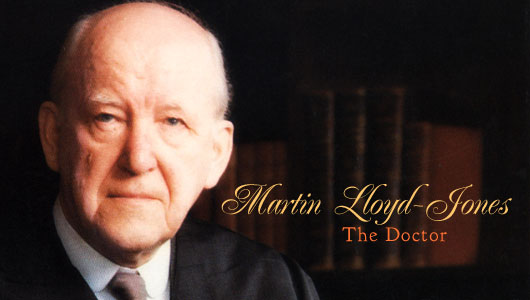
Note: I first met Dr. Eric Alexander when I was a student at the University of London. The year was 1956. He was a great help to the Inter-Collegiate Fellowship of Christian Students and we often came across him in the course of his ministry. One thing we had in common, beyond our oneness in Christ, was our love for and fellowship with Dr. Martyn Lloyd-Jones who when Dr. Alexander was Senior Pastor at St. George's Tron, in Glasgow Scotland, was himself Senior Pastor at Westminster Chapel in London. Later, when I was a missionary on furlough, I had the privilege of preaching at St. George's Tron.


I have seen this narrative in several places and present it here without editorial comment for your enjoyment and edification.

--Dr. Wilfred A. Bellamy


"Dr. Martyn Lloyd-Jones came to Glasgow, Scotland, to preach at the great St. Andrews Hall. This auditorium held more than two thousand people. It was packed, and the preaching was wonderful. After the meeting finished, I was waiting at the side of the platform for transport home. A long line of people were waiting to speak to Dr. Lloyd-Jones, and because I was fairly close to them, I heard some of the conversations. Interestingly, I noticed that every encounter ended in the same way: “Keep on!” was the doctor’s final exhortation as he shook hands.


As it happened, on the journey home I was in the same car as the doctor, and he engaged me in conversation. After the generalities, I summoned enough courage to ask him a question. “Doctor,” I began, “forgive me, but I could not help hearing your last words to every person you spoke with. They were ‘Keep on.’ It sounded as if that was particularly important to you.” He was immediately animated: “My dear man,” he said, “there is nothing more important. The Christian life is not a sprint; it is a marathon, and that is why Jesus says, ‘He who endures to the end shall be saved.’” To my delight, he enlarged on the subject until I was reluctant to get out of the car.


Now, in the year of my eightieth birthday, I have become more convinced than ever of the importance of Dr. Lloyd-Jones’ words. One of the great temptations of old age for the Christian is to accept the idea that because physical and intellectual growth may have ceased, spiritual growth will go the same way. The testimony of Scripture is unanimously opposed to that thought. Paul states in 2 Corinthians 4:16: “Even though our outward man is perishing, yet the inward man is being renewed day by day.” Isaiah says in 40:29–31: “He gives strength to the weary, and increases the power of the weak… . Those who hope in the Lord will renew their strength… . They will run and not grow weary, they will walk and not faint.” The psalmist, speaking about the righteous in Psalm 92:14, writes, “They will still bear fruit in old age.”


Of course, we want to ask, “What is the secret of endurance, and of the renewal of the inward man?” Well, there is a “golden nugget” of truth in Philippians 2:12–13 that helps us in answering that question. There are four secrets embedded in these words of the Apostle: “Work out your own salvation with fear and trembling, for it is God who is at work in you, to will and to work for his good pleasure.”

These secrets are all facts to be believed, not challenges to be faced:

1. If you are a child of God, God is at work in you (v. 13). The indwelling of God in the believer is a fundamental truth of the New Testament, exemplified in Jesus’ words in John 14:23 and Paul’s in Ephesians 3:16–19. Not only does He dwell in us, but He is engaged in a work in us—clearly the work of our full salvation.


2. God is not only at work in us, He is continuously (or, if you prefer, “perpetually”) at work in us. We know this from the tense of the verb in verse 13. Tenses are really important in the New Testament. The tense of the verb “works” is the present continuous tense, which just means that this is something God is doing all the time. He never ceases, either day or night (Ps. 121:4). God knows no “age of retirement,” so He is as active in us when we are eighty as when we were eighteen.


3. God works unto completion. Some people have great intentions and a lot of goodwill and good plans, but they achieve very little. Here, however, Paul says, “God works in you to will and to work.” That means that all His purposes are eventually fulfilled, and that continues until we are glorified in heaven.


4. God’s work in us is “for his good pleasure.” Sometimes God’s plans may differ greatly from ours. There are times when, as Jesus experienced, God’s way involves pain and loss in order to fulfill His will. But the good pleasure of God is always perfect, without flaw, and impossible to improve upon.


Is there then no challenge in these words of Paul? Of course not. Paul urges us to “work out [our] own salvation.” But that does not mean, “work out your own way of salvation,” or “work with a view to your salvation.” This salvation is already ours. God has accomplished it and given it to us. But we have to work out what God has worked in. There are two things involved in this, especially in our latter years. The first is to look to God, and to God alone for the completion of the work of our salvation. Earlier in Philippians, Paul writes, “He who has begun a good work in you will go on to complete it, until the day of Jesus Christ” (1:6). The second is, moment by moment, to set our hearts on the perfect will of God, as Jesus did: “Not my will but yours be done.” That is the desire with which our hearts need to be kept aflame."

-Dr. Eric Alexander


Sanctity of Human Life

I must have sung the hymn "All People That On Earth Do Dwell", dozens of times. It is number one in the Trinity Hymnal and since the sixteenth century has been strong in the Church of Jesus Christ. The poet William Kethe took Psalm 100 as his inspiration and then declared God's truth as it was set to music. Yes, it's an old favorite, but it was a hymn I had not fully understood until in recent years I pondered its meaning:


The Lord ye know is God indeed,
Without our aid He did us make;
We are His flock , He doth us feed
And for His sheep He doth us take.

The hymn establishes the most cogent fact about the sanctity of human life -- God purposed it from before the foundation of the world, God brought it into being in the womb of a woman, and it was God who determined the length of the life of that which He had made. "Without our aid He did us make" the hymn says. Conception could never have occurred had it not been the will of the Father, the Creator of all life, and although we understand the context in which the baby is conceived, we must also understand that the fruit of the union would never occur if it were not the will of God.

When we consider the jealous nature of God as He declares Himself to be, we catch a glimpse of what that means when we consider the work of the artist or the artificer in wood or metal. He is jealous for his creation. How much more therefore is the jealousy of the Lord of the Universe for His creation. So distinctive in design and intent and so destined to fulfill the plan and purposes of God!

Then man decides to take that life and do with it as he pleases! His decision is made circumstantially and often without much thought. While some may take abortion in their stride others will fret for years over the loss of life. Who can measure the psychological consequences of such a heinous act? And who can measure the sorrow that the Creator experiences when the little one that He called forth into being is removed from the earth?

So how are we to treat this aberration in our society? In Africa, a place where I lived for several years, in the tribe where I worked there was no word in the language for abortion. If such occurred naturally the description was always:"she suffered loss." And how great a loss that is! God has given to the Church the responsibility for the defense of His great Name. We are called upon to "love God and enjoy Him for ever." Our enjoyment is rooted in obedience to His command: "Thou shalt do no murder."

Sanctity of Human Life Sunday is January 18, 2015. For the glory of God and for the sake of His creation, the myriad children who are under the threat of disposition, and for the parents who will bear the responsibility for this disaster for years to come, may we remember whom we are as the Children of the Kingdom, and once again commit ourselves to live as Kingdom people, not driven the expediencies of the world, but faithful to the One to Whom we belong.

Wilfred A. Bellamy, Ph.D.

January 2015

Tuesday, January 13, 2015

Communicating about Communion with our Communicants